
Stationery Storage Ideas for Kids’ School Supplies

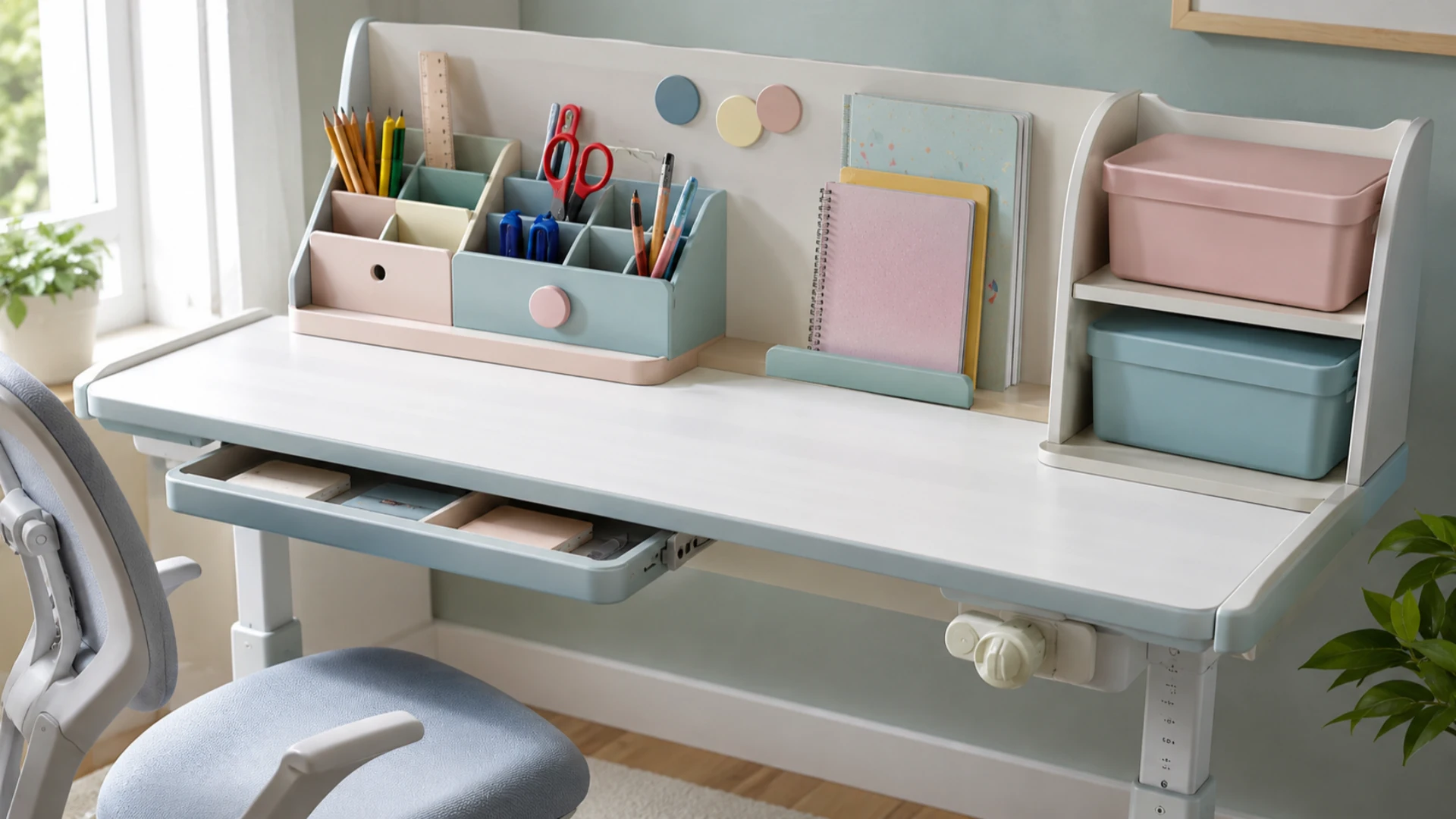
A child’s study desk can become cluttered faster than most parents expect. Pens mix with pencils, erasers disappear under notebooks, scissors compete with rulers for space, and art materials gradually spread into the area meant for homework.
Good stationery storage is not about hiding everything inside one large box. It is about creating a simple system in which frequently used supplies are easy to reach, backup items stay out of the main working area, and every type of stationery has a practical place to return to after use.
For parents, this can make daily homework setup and cleanup easier. For children, a predictable storage system makes it easier to find pencils, markers, rulers, and other supplies without searching through several containers. For retailers, understanding how families actually organize stationery helps determine which products deserve space in a school, storage, or home-study assortment.
A pencil organizer may be enough for everyday writing tools, but it cannot solve every storage problem. Paper needs a different format from pencils. Small accessories can disappear inside deep containers. Backup supplies do not always need to remain on the desktop. Art and craft materials often work better in their own storage area.
This guide explains how to sort school supplies, compare organizer types, choose a practical pencil organizer for desk use, plan storage for different study spaces, evaluate materials and product samples, and build a balanced stationery-storage assortment for retail.
Stationery Storage vs. School Supplies Organization
The terms stationery storage and school supplies organization are closely related, but they describe different parts of the same system.
Stationery storage refers to the physical products and spaces used to hold supplies. These can include pencil organizers, desk caddies, drawers, trays, storage boxes, shelves, and portable containers.
School supplies organization is the method used to decide which items belong in each place, which products need immediate access, and which supplies can stay in secondary storage.
Buying a new organizer without deciding how it will be used often produces a neater-looking version of the same clutter.
What Stationery Storage Includes
A typical study area may need to hold:
- Pencils
- Pens
- Markers
- Highlighters
- Erasers
- Pencil sharpeners
- Rulers
- Scissors
- Glue
- Tape
- Sticky notes
- Index cards
- Small notebooks
- Colored pencils
- Small art or craft materials
These products do not have the same dimensions or use patterns.
A ruler is long and thin. An eraser is small and easy to lose. Scissors require more width than a pencil. Notebooks need flat or upright paper storage rather than a deep pencil cup.
Useful stationery storage accounts for these differences instead of forcing everything into one container.
Storage Products vs. Organization Systems
A stationery organizer is one product. An organization system explains how several products and spaces work together.
A simple desk might use:
- One pencil organizer for everyday writing tools
- One shallow drawer for erasers and sharpeners
- One stationery storage box for replacement supplies
- One separate container for creative materials
- One shelf or tray for notebooks and paper
This is usually more flexible than trying to find one organizer that stores every school item.
The same principle applies when retailers plan an assortment. Customers may need several complementary formats rather than several versions of the same product.
Why Easy Access Matters
An organized desk does not need to hide every object.
Frequently used supplies should be easier to access than backup items. A child who uses a pencil several times during one homework session should not need to open several boxes to find it. For additional ideas on setting up a practical homework area, Scholastic recommends keeping commonly needed supplies together and using boxes, drawers, or organizers to make them easy to access
At the same time, keeping every marker, notebook, glue stick, spare pencil, and art tool on the desktop creates its own problem.
A useful system balances:
- Accessibility
- Visibility
- Storage capacity
- Clear working space
- Simplicity
The objective is to make the items needed now easy to find while moving everything else to an appropriate secondary location. Child Mind Institute similarly recommends a homework space with the necessary paper and pencils available so children do not have to interrupt work to search for supplies.
Start by Sorting School Supplies by Use
Before buying another container, look at what actually needs to be stored.
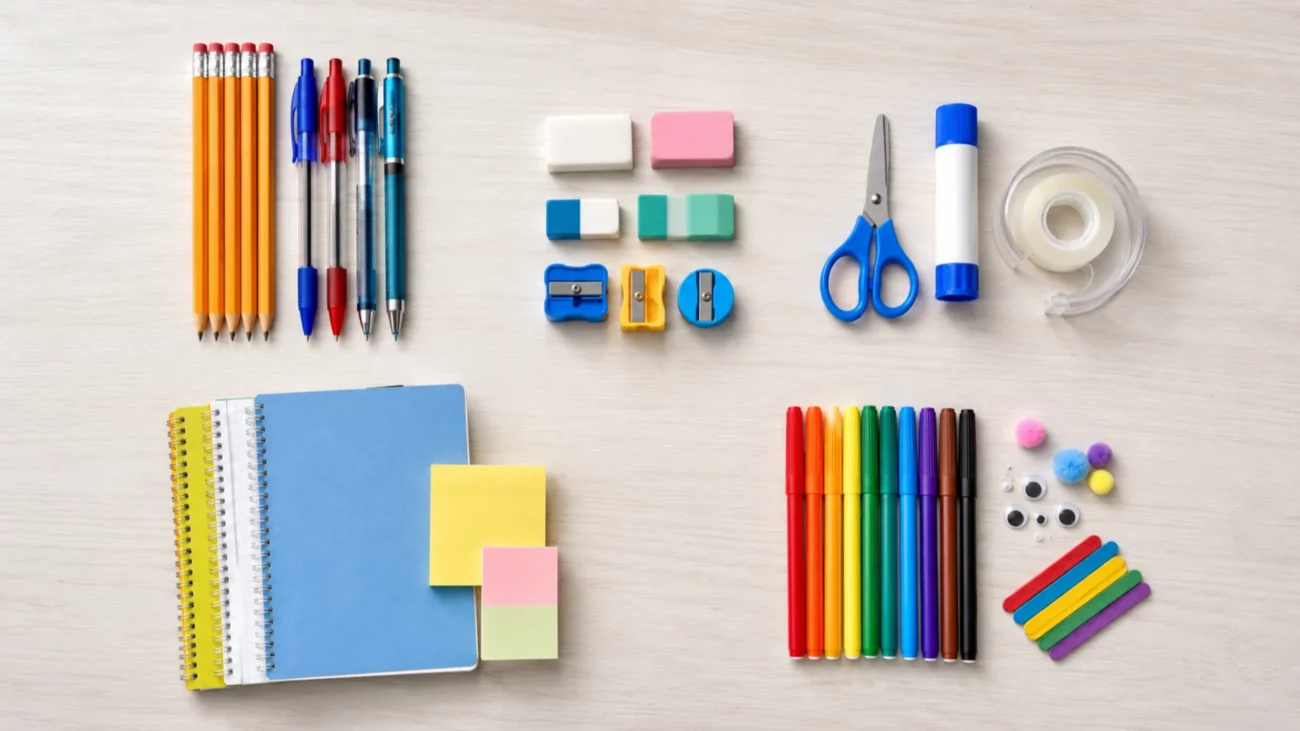
The first practical step in learning how to organize school supplies is sorting by both product type and frequency of use.
Everyday Writing Tools
Everyday items can include:
- Pencils
- Pens
- Erasers
- Sharpeners
- Rulers
- Frequently used highlighters
These are strong candidates for desktop storage because they are used regularly and benefit from immediate access.
A small pencil organizer or the front section of a larger desk organizer may be enough.
There is no need to keep every replacement pencil on the desktop simply because pencils are used every day.
Occasional Desk Tools
Other tools are useful but less frequent:
- Scissors
- Glue sticks
- Tape
- Staplers
- Specialty rulers
- Other project tools
These items may fit better in:
- A secondary organizer compartment
- A desk drawer
- A nearby storage box
- A shelf container
Separating them from everyday writing tools can keep the primary storage area easier to use.
Paper and Notes
Paper products create a different storage challenge.
Examples include:
- Notebooks
- Memo pads
- Sticky notes
- Index cards
- Loose worksheets
- Activity sheets
Depending on size and quantity, paper may work better in:
- Document trays
- Vertical file holders
- Shelves
- Shallow drawers
- Dedicated sections of a desktop organizer
Placing paper in the same deep compartments as pencils often wastes space and can bend the paper.
Art and Craft Materials
Creative supplies can include:
- Colored pencils
- Markers
- Paint brushes
- Stickers
- Decorative tape
- Glue
- Small craft tools
- Paper craft materials
These products can quickly overwhelm a daily school-supplies organizer.
A separate creative-material box or caddy allows the materials to come to the desk when needed and return to storage afterward.
The goal is not to prevent art products from being used at the study desk. It is to stop a large creative collection from taking over the area used for everyday schoolwork.
Frequently Used vs. Occasionally Used Items
After sorting by type, divide the supplies into two practical zones.
Daily-access storage contains supplies used regularly and stays on or immediately beside the desk.
Secondary storage contains backup supplies, occasional tools, larger art collections, and other products that do not need permanent desktop access.
This distinction is one of the most useful principles in a long-term school supplies storage system.
Best Organizer Types for Kids’ Study Desks
Once the supplies are sorted, the organizer can be selected according to the actual storage problem.
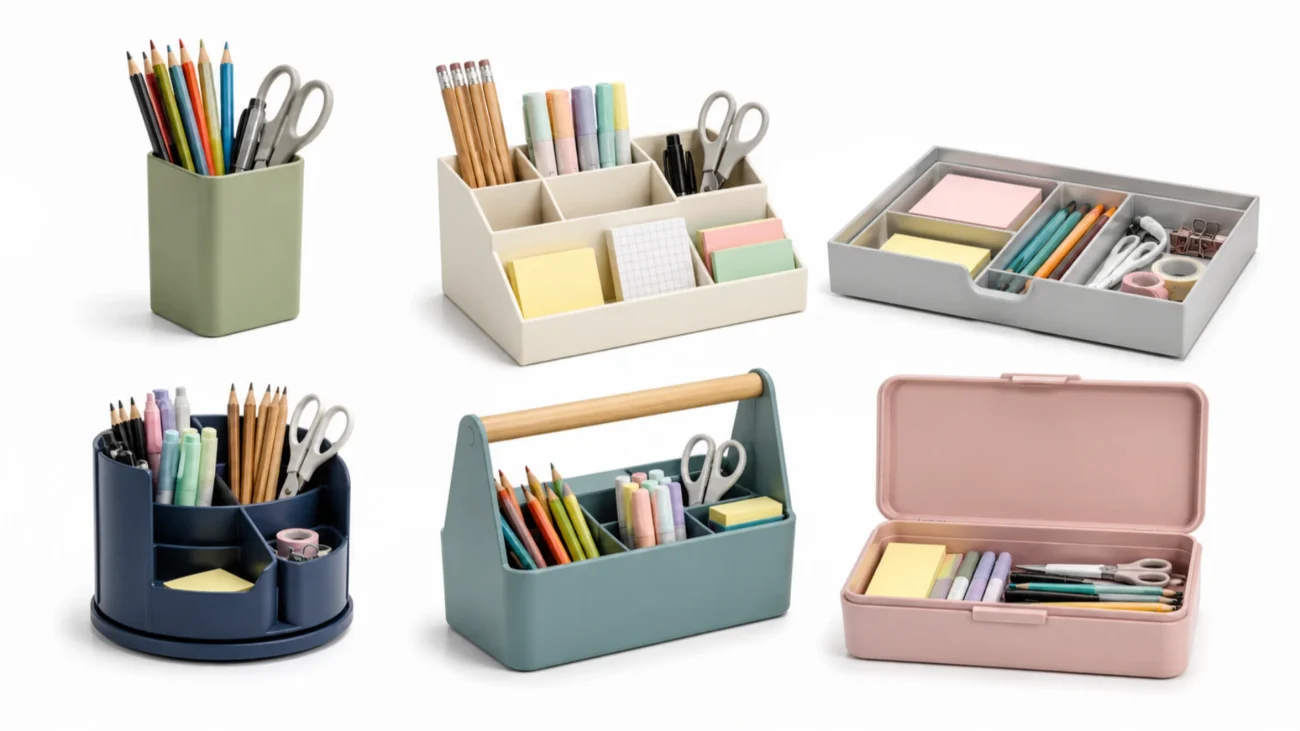
The best product is not necessarily the organizer with the largest capacity or the highest number of compartments.
Pencil Organizers
A pencil organizer is designed primarily for upright writing tools.
It can hold:
- Pencils
- Pens
- Markers
- Highlighters
- Rulers
- Scissors where the compartment permits
When comparing products, check:
- Number of usable compartments
- Compartment height and depth
- Base stability
- Opening size
- Visibility
- Desk footprint
Several useful sections are generally more valuable than many narrow sections that cannot hold normal stationery.
Multi-Compartment Desk Organizers
A multi-compartment stationery organizer can combine spaces for:
- Writing tools
- Erasers
- Sharpeners
- Sticky notes
- Scissors
- Glue
- Small desk accessories
These products can reduce the number of separate containers on a desk.
However, the individual compartments still need to match realistic items.
A section intended for sticky notes should accommodate the intended pad size. A slot intended for scissors should be wide enough for the handle. A small tray should allow the user to retrieve an eraser without turning the whole organizer upside down.
Drawer Organizers
Drawer trays and divided drawers work well for products that do not need to remain visible.
Typical uses include:
- Erasers
- Sharpeners
- Clips
- Sticky notes
- Spare pens
- Small accessories
For a drawer product, check:
- Internal depth
- Drawer movement
- Handle or grip
- Access to the rear
- Stability when opened
- Whether the drawer can be removed for cleaning
A deep drawer without internal organization can quickly become a mixed storage box.
Rotating Desk Organizers
Rotating organizers provide access to several compartments from different sides.
They may be useful for:
- Shared desks
- Marker collections
- Creative activities
- Larger desks
- Central worktables
Important checks include:
- Rotation smoothness
- Loaded stability
- Base size
- Compartment balance
- Clearance around the organizer
A rotating mechanism should still work when the organizer is filled, not only when the sample is empty.
Portable Organizers
A portable organizer can move between:
- A bedroom desk
- A dining table
- A homework area
- A classroom
- A shared family workspace
Useful design features can include:
- A practical handle
- Balanced weight distribution
- Stable internal compartments
- Openings that reduce accidental spilling
For families without one permanent homework desk, portability may be more valuable than maximum capacity.
Organizer Type Comparison
| Organizer Type | Best For | Main Advantage | Main Check |
|---|---|---|---|
| Pencil organizer | Daily pens and pencils | Immediate access | Depth and stability |
| Multi-compartment organizer | Mixed daily stationery | Several categories in one unit | Compartment usability |
| Drawer organizer | Small or less-used items | Clear desktop | Drawer access |
| Rotating organizer | Multiple tool groups | Access from several sides | Loaded rotation and stability |
| Portable caddy | Flexible study locations | Easy movement | Handle and spill control |
| Storage box | Backup and larger supplies | Higher capacity | Internal organization and lid |
Pencil Organizer for Desk: What Should Buyers Check?
A pencil organizer for desk use looks simple, but small structural details determine how practical it is.
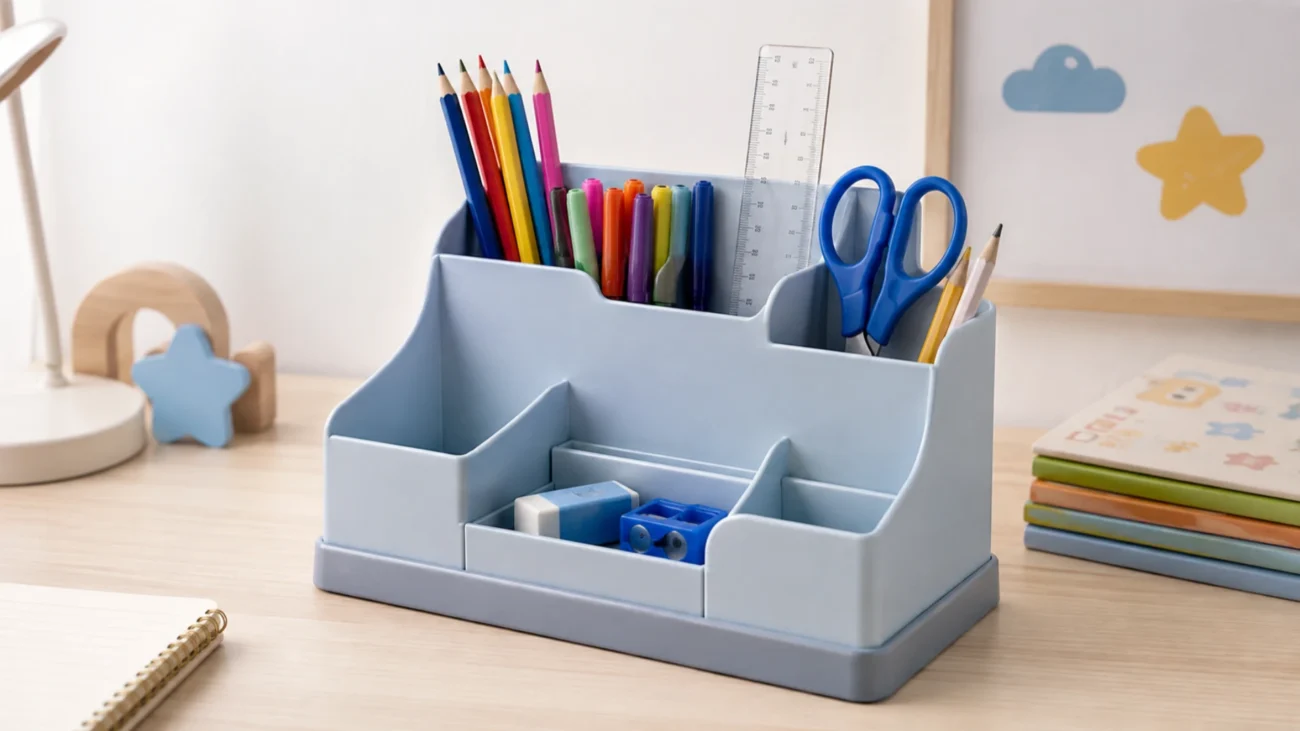
An organizer can photograph well and still perform poorly once normal pens, pencils, rulers, scissors, and small accessories are placed inside.
Compartment Depth
The required depth depends on the item.
Tall writing tools benefit from enough support to remain upright, while very deep compartments can make small items difficult to retrieve.
A useful organizer may therefore combine:
- Deeper sections for pencils and markers
- Medium sections for scissors and rulers
- Shallower areas for erasers or sharpeners
Avoid treating one compartment depth as suitable for every item.
Base Stability
Test the organizer while loaded.
Place realistic supplies in it and then:
- Remove a tall item from one side
- Add several heavier items to another section
- Move the organizer slightly
- Open any drawer if included
Check whether the product:
- Wobbles
- Slides
- Tilts
- Becomes top-heavy
- Changes position when a drawer opens
Capacity has limited value if the organizer becomes unstable when used normally.
Reach and Visibility
A child should be able to identify and retrieve the supplies stored inside.
Visibility can be improved through:
- Open tops
- Graduated compartment heights
- Transparent sections
- Wide openings
- Logical item grouping
Opaque products can still work well if the layout makes the contents easy to understand.
Desk Footprint
The amount of stationery an organizer holds should be considered together with the working space it consumes.
A larger unit may offer higher nominal capacity but leave insufficient space for:
- Books
- Worksheets
- Writing
- Drawing
- A laptop or tablet
For smaller desks, a compact pencil organizer with well-designed compartments may be more useful than a large multifunction organizer.
Storage Boxes, Drawers, and Desktop Organizers
Not every item belongs in the daily pencil organizer.
A complete stationery storage system usually combines desktop access with secondary storage.
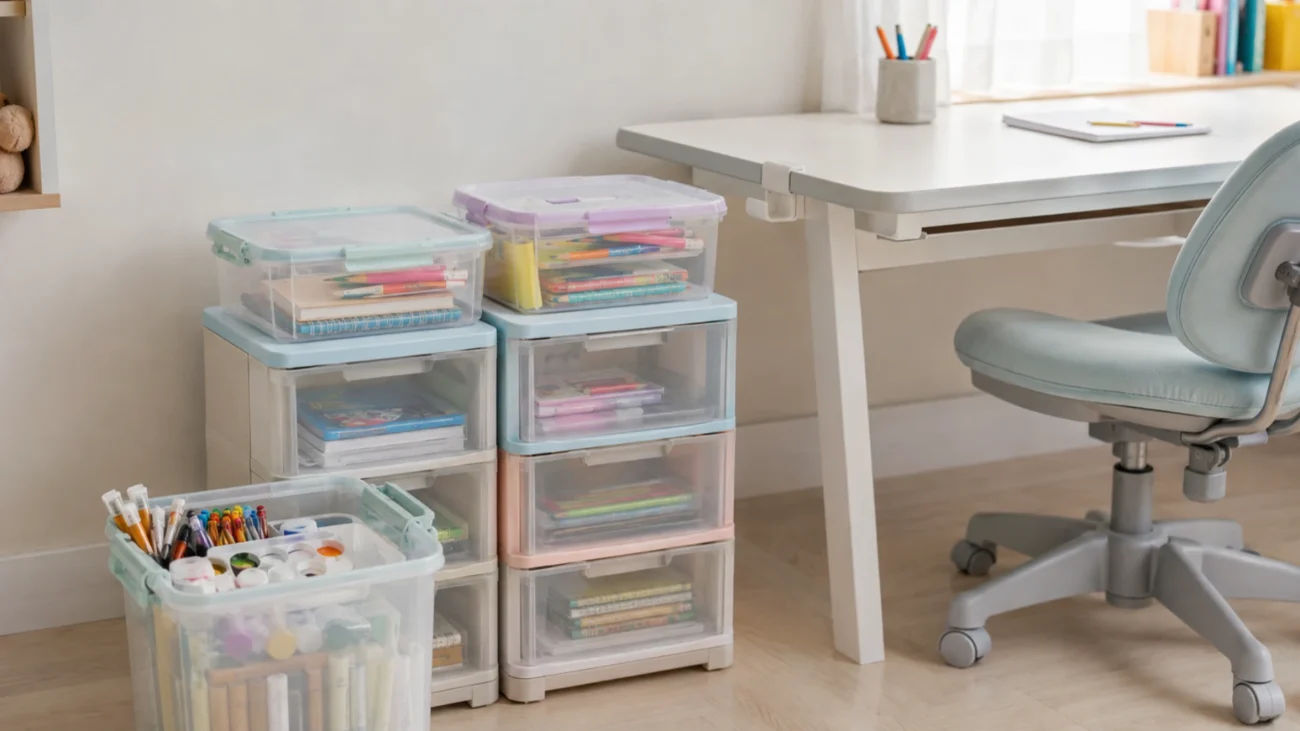
Stationery Storage Boxes
A stationery storage box can hold larger quantities of:
- Backup pencils
- Replacement pens
- Markers
- Glue
- Paper accessories
- Art materials
- Seasonal supplies
When evaluating a storage box, check:
- Internal dimensions
- Lid fit
- Opening method
- Handles
- Internal dividers
- Stackability
- Visibility
- Loaded weight
A large empty box does not automatically create organization. If many small supplies are mixed together inside, dividers or smaller internal groups may still be needed.
Pencil Storage Boxes
A pencil storage box serves a different purpose from a portable pencil case.
A pencil case is mainly intended to carry daily supplies between home, school, and classes. A storage box is more suitable for keeping additional writing tools at home.
It can store:
- Replacement pencils
- Colored pencil collections
- Drawing pens
- Marker sets
- Geometry tools
The inside length should match the products being stored, and the lid should keep items in place when the box is moved. Buyers comparing home storage with portable school storage can also use our kids pencil case buying guide to compare pencil boxes, pouches, compartments, and carrying formats.
Desktop Storage Organizers
A desktop storage organizer may combine:
- Vertical pencil compartments
- Shallow trays
- Drawers
- Note storage
- Small paper sections
These products work well when several daily-use categories need immediate access.
The trade-off is complexity. Each compartment should solve an actual storage problem rather than exist only to make the product appear more feature-rich.
Stackable Storage
Stackable boxes and drawers can make use of vertical space.
They may work particularly well when:
- Desk width is limited
- Several categories need separation
- Backup supplies need to remain nearby
Check:
- Connection between units
- Stability
- Loaded weight
- Access to lower units
- Drawer movement
- Overall height
If lower storage becomes difficult to access after another unit is added above it, stacking may reduce rather than improve usability.
How to Organize School Supplies at Home
Knowing how to organize school supplies is more useful than simply buying more containers.
The following process can be adapted to different desk sizes and stationery collections. Understood also recommends keeping school supplies close to the child’s work area and suggests portable supply caddies as one practical way to organize materials by function.
Step 1: Empty the Existing Storage Area
Remove items from:
- Desktop organizers
- Drawers
- Pencil cases
- Shelves
- Storage boxes
Seeing the full collection helps reveal duplicates and shows the actual volume that needs storage.
Step 2: Group Supplies by Product Type
Create groups such as:
- Writing tools
- Coloring tools
- Erasers and sharpeners
- Measuring and cutting tools
- Adhesives
- Paper products
- Art supplies
- Backup stationery
This makes it easier to decide which groups should stay together.
Step 3: Remove Damaged or Unusable Items
Check for:
- Dried markers
- Broken pencils
- Empty glue
- Damaged rulers
- Pens that no longer write
- Worn-out accessories
Storage space should not be consumed by items that can no longer be used.
Step 4: Separate Daily and Occasional Items
From each category, identify what is used regularly.
Daily supplies move into the most accessible storage.
Backup and occasional items move into:
- Drawers
- Storage boxes
- Cabinets
- Shelves
This is often enough to reduce desktop clutter significantly.
Step 5: Match Storage to Quantity and Shape
Do not select the organizer first and then force the stationery into it.
Instead, consider:
- Number of items
- Length
- Width
- Frequency of use
- Need for visibility
- Need for portability
Tall tools can use vertical compartments. Paper can use trays. Small items often benefit from shallow sections. Backup supplies can use larger boxes.
Step 6: Make Categories Easy to Recognize
Storage categories can be communicated through:
- Separate compartments
- Individual boxes
- Simple labels
- Transparent materials
- Color coding
The system should be understandable enough that the user can return an item without stopping to decide where it belongs.
Step 7: Keep the Main Working Area Clear
The center of the desk should remain available for its main purpose.
Depending on the user, that may include:
- Writing
- Reading
- Drawing
- Homework
- Computer work
Storage should support the workspace, not consume it.
Step 8: Review the System After Real Use
An organization system should be judged after several normal study sessions.
Check whether:
- Frequently used items are easy to reach
- Supplies return to the intended place
- Small items disappear in deep sections
- One compartment becomes overloaded
- Some sections are never used
- The desktop gradually becomes crowded again
If a problem repeats, change the system rather than simply asking the user to follow a layout that does not fit the routine.
How Much Stationery Should Stay on the Desk?
Most children do not need their complete stationery collection visible at all times.
The desktop should primarily support the current activity.
Daily Essentials
Common daily-access items can include:
- Pencils
- Pens
- Eraser
- Sharpener
- Ruler
- Frequently used highlighter
The exact number depends on the child and the schoolwork.
There is no universal requirement to keep a fixed number of pencils or pens on a desk.
The useful question is whether every item in the primary organizer is used often enough to justify occupying immediate-access space.
Backup Supplies
Replacement items can stay in secondary storage.
Examples include:
- Extra pencils
- Unopened pens
- Replacement erasers
- Additional markers
- Spare glue
- Refill products
The desktop organizer can then be replenished when required.
Art Supplies
Large art collections can remain in their own storage and move to the desk for creative activities.
This is particularly useful for:
- Marker collections
- Colored pencils
- Paint
- Brushes
- Craft tools
- Decorative materials
Separating them from normal writing tools can make both groups easier to manage.
Avoid Overfilling Organizers
There is no universal “correct percentage” for filling an organizer.
A more useful test is practical access.
The organizer is probably too full when:
- Items need to be removed to reach others
- Small objects disappear underneath larger ones
- Supplies fall out during normal use
- Returning items takes too much effort
- Compartments no longer represent clear categories
Leave enough space for the product to remain usable.
Materials Used in Desk and Stationery Organizers
Material affects weight, structure, cleaning, appearance, and manufacturing options.
The complete organizer should be evaluated rather than assuming one material is always better.
Plastic Desk Organizers
A plastic desk organizer can support:
- Molded compartments
- Drawers
- Transparent sections
- Different shapes
- Stackable structures
- Printed or molded colors
When reviewing a plastic sample, check:
- Wall thickness
- Mold finish
- Edges
- Warping
- Drawer fit
- Surface scratches
- Odor
- Stability
Transparent designs can improve visibility, while opaque designs may offer more decorative options.
Do not automatically describe a plastic product as BPA-free, non-toxic, or child-safe unless the specific claim is supported for the finished product.
Metal Desk Organizers
A metal desk organizer may use:
- Sheet metal
- Wire
- Mesh
- Metal frames
Check:
- Edges
- Corners
- Wire ends
- Welds where applicable
- Surface coating
- Scratching
- Base protection
- Stability
Mesh can provide visibility, but opening size should also be considered if small stationery is stored inside.
Metal is not automatically superior to plastic. The best choice depends on the product construction and intended use.
Mixed-Material Organizers
Some products combine:
- Metal and plastic
- Plastic and silicone
- Wood and metal
- Fabric and rigid structures
Mixed materials can combine different functions, but buyers should inspect how the materials connect.
Check:
- Joints
- Fasteners
- Adhesive areas
- Handles
- Feet
- Moving components
A good-looking material combination still needs to remain stable during normal use.
Size and Layout for Kids’ Study Spaces
The same stationery organizer can work well on one desk and poorly on another.
The desk layout should therefore be reviewed before the organizer is selected.
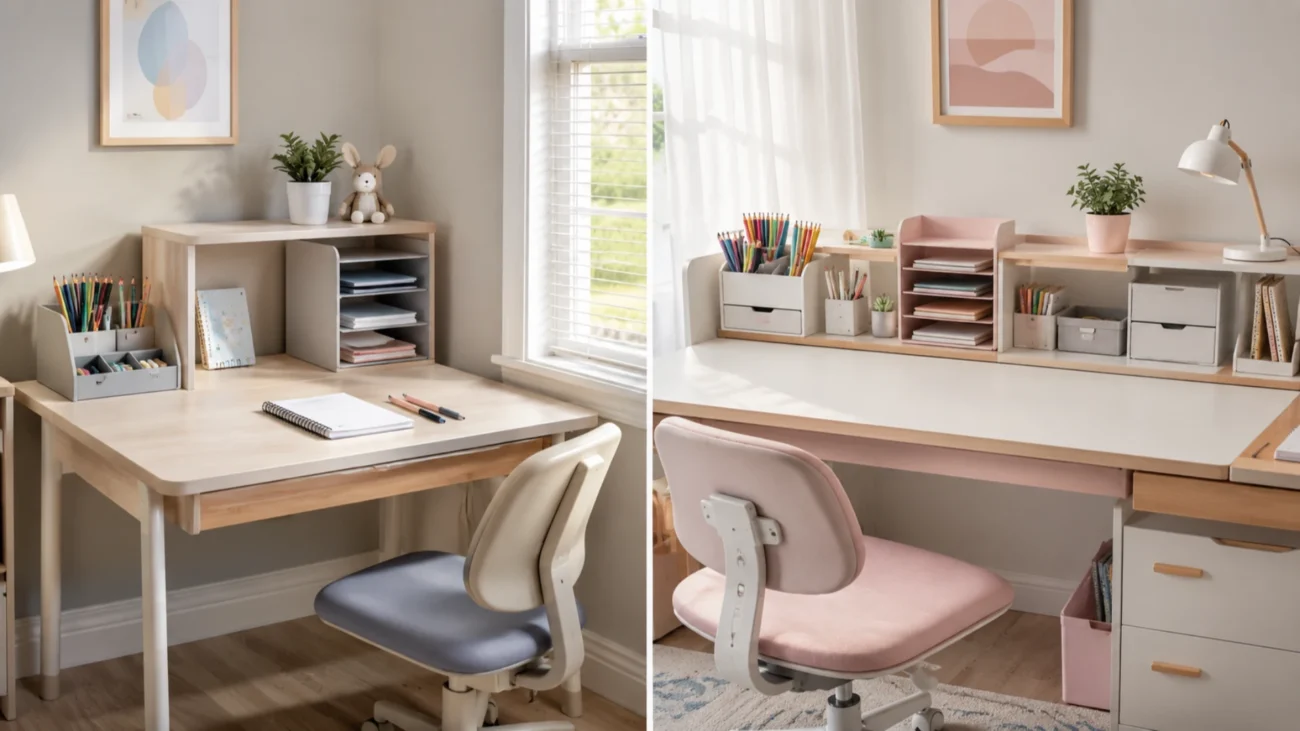
Small Desks
Small desks benefit from:
- Compact desktop organizers
- Vertical storage
- Limited daily-access items
- Nearby drawers
- Shelf storage
- Portable secondary boxes
Horizontal storage products can consume working space quickly.
The aim is to store the most frequently used items near the user while moving backup supplies elsewhere.
Larger Study Desks
A larger surface allows several functional zones.
For example:
- Writing-tool zone
- Paper zone
- Creative-material zone
- Electronics zone
Several smaller storage products may provide clearer separation than one oversized unit.
Shared Study Spaces
Shared desks may benefit from:
- Separate organizers for each child
- Color-coded storage
- Portable caddies
- Clearly separated personal supplies
- Central storage for shared items
The system should make ownership and shared use easy to understand.
Measure Before Buying
Before purchasing an organizer, measure the available space.
| Area to Measure | What to Check | Why It Matters |
|---|---|---|
| Desktop | Available width and depth | Prevents the organizer from taking over the work area |
| Shelf | Width, depth, and vertical clearance | Confirms boxes and organizers fit |
| Drawer | Internal width, depth, and height | Confirms trays and drawers can close |
| Organizer footprint | External base dimensions | Shows how much working space it will occupy |
| Nearby objects | Lamp, monitor, books, wall shelf | Prevents interference with other desk functions |
Product dimensions should be compared with the actual study environment rather than an assumed “standard” children’s desk size.
Age-Friendly Stationery Storage
A storage system should match what the intended user can understand and operate.
This does not require rigid age formulas. Buyers planning storage products for different school stages can also review our school supplies list by grade for age-based stationery and organization needs.
Easy Reach
Frequently used products should be placed where they can be accessed without unnecessary stretching, moving furniture, or removing other objects.
The exact location depends on:
- Desk depth
- Shelf position
- Child height
- Seating position
- Organizer design
Items used less often can stay farther away.
Simple Categories
A complex sorting system is not always a better system.
For a user who is still learning to organize, broad groups may be easier:
- Writing tools
- Coloring tools
- Cutting and gluing
- Paper
- Creative materials
A user with more stationery and a stable routine may prefer more detailed categories.
The number of compartments should follow the storage need rather than the other way around.
Visible Storage
Open or transparent storage can make frequently used supplies easier to identify.
Closed boxes may work better for:
- Backup stationery
- Less-used supplies
- Large collections
- Items that would otherwise create visual clutter
A practical desk can combine visible daily storage with closed secondary storage.
Safe Placement
Consider how the product is positioned as well as how it is constructed.
Avoid placing:
- Heavy boxes where they can easily fall
- Tall unstable organizers near an edge
- Products with unfinished or sharp edges in high-contact areas
Loaded stability should be checked, especially with tall desktop organizers.
How Retailers Can Build a Stationery Storage Range
Retailers can apply the same organization principles to assortment planning.
The objective is not to stock every organizer available. It is to create enough structural variety to serve different storage needs.
Entry-Level Organizers
Entry-level products may include:
- Simple pencil cups
- Small compartment organizers
- Basic storage boxes
These products can serve customers who only need a simple solution for daily writing tools.
Mid-Size Desktop Organizers
Mid-size products may combine:
- Pencil compartments
- Shallow trays
- Drawers
- Note storage
- Several daily-use categories
They provide a more complete desktop solution without moving into large secondary storage.
Larger Storage Boxes
Larger products can serve:
- Backup stationery
- Art materials
- Craft supplies
- Larger home-study collections
The difference between desktop and secondary storage should be clear in merchandising and product descriptions.
Materials and Colors
A range can include:
- Plastic
- Metal
- Transparent products
- Neutral colors
- Brighter school colors
- Original printed designs
Color provides variety, but structure should remain the main reason for stocking a separate SKU.
Several products with identical construction and only minor color differences can increase inventory complexity without significantly expanding use cases.
Matching Stationery Collections
Storage products can also work within a coordinated school range.
Possible combinations include:
- Pencil organizer
- Pencil case
- Stationery set
- Notebook
- Storage box
A retailer can coordinate colors or original graphics while still giving every product a different practical function. Retailers building coordinated ranges can use our kids stationery set buying guide to plan matching writing tools, pencil cases, storage products, and gift-ready sets.
What Retail Buyers Should Check in Storage Organizer Samples
A retail sample should be tested with real stationery before a larger order is approved.
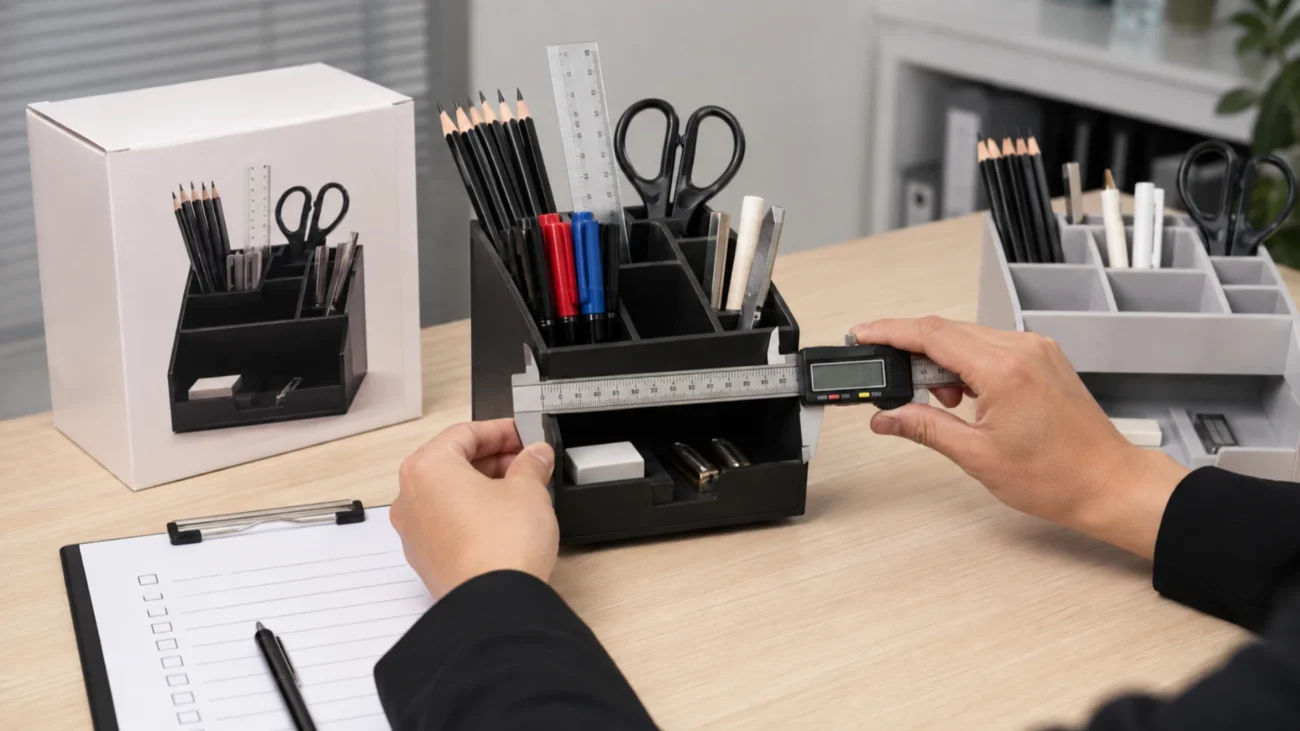
Check External and Internal Dimensions
Record:
- Width
- Depth
- Height
- Compartment dimensions
- Drawer dimensions
- Opening dimensions
External size determines where the organizer fits.
Internal size determines what it can actually hold.
Test Loaded Stability
Do not test an empty organizer only.
Load it with:
- Pencils
- Markers
- Scissors
- Rulers
- Other intended supplies
Then check:
- Base contact
- Sliding
- Tipping
- Drawer movement
- Balance
- Rotating mechanism where applicable
Test Compartment Usability
Use real items.
Check whether:
- Short erasers can be retrieved
- Thick markers fit
- Long pencils remain supported
- Scissors can enter and leave easily
- Small items stay visible
A compartment can meet the drawing specification and still be inconvenient in practice.
Inspect Edges and Finish
Review:
- Plastic mold lines
- Corners
- Metal edges
- Mesh wire ends
- Surface coating
- Drawer openings
- Handles
- Connection points
Inspect less-visible areas as well as the front surface.
Review Cleaning Access
Consider how normal desk residue can be removed.
Check:
- Narrow corners
- Deep compartments
- Textured surfaces
- Mesh
- Removable trays
- Drawer interiors
Products that can be disassembled should also be checked for easy reassembly.
Review Individual Packaging
Packaging should protect the organizer from:
- Scratches
- Cracks
- Dents
- Drawer movement
- Surface damage
It should also communicate enough information for the intended retail channel.
Review Carton Packing
For larger orders, record:
- Units per carton
- Product orientation
- Nesting where applicable
- Individual protection
- Net weight
- Gross weight
- Carton dimensions
Bulky storage products can create significant shipping volume even when individual unit weight is low. Buyers evaluating storage products as part of a larger school range can also use our school-supplies supplier guide to compare samples, specifications, production control, and reorder support.
Sample Inspection Summary
| Check | What to Verify |
|---|---|
| Dimensions | External and usable internal size |
| Stability | Performance when realistically loaded |
| Compartments | Fit for actual stationery |
| Finish | Edges, seams, coating, surfaces |
| Moving parts | Drawers, rotating bases, handles |
| Cleaning | Access to corners and surfaces |
| Packaging | Protection and retail presentation |
| Carton | Quantity, dimensions, weight, nesting |
Common Stationery Storage Mistakes
1. Buying an Oversized Organizer for a Small Desk
More storage capacity does not help if the product removes the space needed for homework.
2. Choosing Too Many Small Compartments
A large number of sections can reduce flexibility if normal stationery does not fit.
3. Mixing Backup Supplies with Daily Tools
Backup products can make the everyday organizer unnecessarily crowded.
4. Keeping Everything on the Desktop
The desk still needs to function as a work surface.
5. Ignoring Loaded Stability
An empty organizer may appear stable but behave differently when filled with tall tools.
6. Ignoring Access to Small Items
Deep compartments can hide erasers, sharpeners, clips, and other short products.
7. Choosing by Appearance Alone
Color and graphics do not compensate for poor dimensions or difficult access.
8. Failing to Measure the Study Space
An organizer can fit the desk dimensions and still interfere with a lamp, screen, books, drawers, or shelves.
9. Mixing Large Art Collections with Daily Stationery
Separating the two groups can make both easier to find and use.
10. Overfilling Storage Boxes
A box that requires digging through a mixed pile provides capacity but weak organization.
11. Stocking Too Many Similar Organizer SKUs
Retail ranges benefit more from structural differences than minor variations of one organizer.
12. Treating Wholesale Keywords as the Main Blog Topic
Queries such as desk organizer wholesale and stationery organizer supplier represent stronger commercial intent and are better handled by category or B2B pages. A blog like this should answer organization, comparison, and product-selection questions.
Frequently Asked Questions About Stationery Storage
What Is the Best Way to Organize School Supplies?
Start by sorting school supplies by type and frequency of use.
Keep everyday writing tools in an accessible pencil organizer or desktop organizer. Move backup products, larger collections, and occasional tools into drawers, boxes, or shelves.
Then review the system after normal use and adjust any storage location that repeatedly creates clutter.
What Should Go in a Pencil Organizer?
A pencil organizer works best for frequently used writing and desk tools such as:
- Pencils
- Pens
- Markers
- Highlighters
- Rulers
- Scissors where the compartment fits them
Small erasers and sharpeners may work better in shallow trays or drawers.
How Do You Organize Stationery on a Small Desk?
Use the desktop only for frequently used items.
Choose compact or vertical storage and move backup supplies into:
- Drawers
- Shelves
- Under-desk boxes
- Nearby storage containers
The objective is to preserve a clear working area.
Is a Pencil Organizer for Desk Better Than a Storage Box?
They solve different problems.
A pencil organizer for desk use provides immediate access to everyday tools.
A storage box provides greater capacity for:
- Backup supplies
- Art products
- Larger collections
- Less frequently used items
Many study spaces benefit from both.
What Size Kids Desk Organizer Should I Choose?
Measure the available space first.
Compare:
- Desk dimensions
- Organizer footprint
- Internal compartment dimensions
- Nearby shelves
- Lamp or screen position
Choose the smallest product that comfortably stores the intended daily supplies rather than selecting a size based only on advertised capacity.
Are Plastic or Metal Desk Organizers Better?
Neither is automatically better.
Plastic organizers can provide molded compartments, transparent sections, lighter weight, and many shapes.
Metal organizers can provide rigid frames, thin walls, and different mesh or sheet structures.
Compare the finished products for:
- Stability
- Edge finish
- Weight
- Cleaning
- Compartment usability
- Desk protection
How Should Art Supplies and School Stationery Be Stored Separately?
Keep everyday school stationery in the primary study area.
Place larger art and craft collections in a dedicated box, caddy, or secondary organizer.
Bring the creative materials to the desk when required and return them afterward.
How Do Retailers Choose Stationery Organizers for a School Range?
Retailers should compare:
- Organizer structure
- Desk footprint
- Usable capacity
- Material
- Stability
- Compartment dimensions
- Packaging
- Price position
A balanced range should contain products that solve different storage problems rather than many nearly identical designs.
Conclusion
Effective stationery storage starts with how school supplies are actually used.
Frequently used pencils, pens, erasers, and rulers need easy access. Backup stationery can move into drawers or storage boxes. Larger art collections often benefit from a separate storage area. A pencil organizer can keep everyday writing tools visible, while a larger stationery organizer or box can handle additional supplies without overcrowding the desk. Buyers ready to compare commercial options can browse Wandefu’s Storage collection for desktop organizers, storage boxes, cases, and related storage products.
The right product also needs to fit the study space. Compartment dimensions, loaded stability, internal visibility, desk footprint, material, cleaning access, and product placement are more useful selection criteria than appearance or advertised capacity alone.
For retailers, the same principles support a clearer assortment. Basic pencil organizers, multi-compartment desktop units, larger storage boxes, portable solutions, and different material structures can serve distinct customer needs without creating excessive duplicate SKUs.
A good organization system does more than make a desk look tidy. It makes the supplies needed for study easier to find, easier to return, and easier to use. Retailers and distributors can contact the Wandefu team to discuss storage products, packaging, quantities, customization, and wholesale sourcing requirements.