
Craft Supplies Suppliers: How to Find and Evaluate Wholesale Partners


Finding reliable craft supplies suppliers is an important step for retailers, distributors, gift shops, and online businesses that sell creative products. The right sourcing partner can help businesses build a suitable product assortment, compare purchasing options, manage product requirements, and maintain a more consistent supply of goods.
However, finding a supplier is only the beginning. Buyers need to understand the differences between manufacturers, wholesale distributors, and multi-category sourcing partners. They also need to compare product ranges, minimum order quantities, packaging options, customization capabilities, and supply arrangements before making a purchasing decision.
This guide explains where to find craft supplies suppliers, how to compare different sourcing options, and what retailers should consider before placing a wholesale order.
Where to Find Craft Supplies Suppliers
There are several ways to identify potential suppliers. The most suitable approach depends on your product categories, target market, order quantities, and customization requirements.
Search Supplier Websites and Product Catalogs
Supplier websites are a useful starting point when researching craft products. They can help you understand available categories, product styles, packaging formats, and purchasing arrangements.
When reviewing a supplier’s website, look for:
- A clear product catalog organized by category
- Product specifications and detailed images
- Information about wholesale purchasing
- Minimum order quantity requirements
- Available customization or private-label services
- Contact information and quotation procedures
A large catalog does not necessarily mean that a supplier is suitable for your business. Check whether the products match your target customers and whether the supplier can support your expected order requirements.
For example, a retailer specializing in children’s creative products may need activity books, sticker crafts, painting sets, and DIY kits. A store serving experienced hobbyists may require a different combination of materials, tools, and components.
Explore B2B Platforms and Wholesale Marketplaces
B2B platforms and wholesale marketplaces can help buyers discover suppliers across different product categories.
These platforms may provide product listings, supplier profiles, purchasing information, and opportunities to compare multiple offers.
However, buyers should evaluate each supplier individually rather than assuming that every listing represents the same level of manufacturing capability, product quality, or export experience.
Before proceeding, confirm the supplier’s actual business role, product specifications, ordering conditions, and responsibility for quality control and delivery.
Attend Trade Shows and Industry Events
Trade shows can provide opportunities to examine products, compare designs, discuss packaging, and communicate directly with suppliers.
They can be particularly useful when you need to evaluate physical samples or explore products that are difficult to assess from photographs alone.
When contacting suppliers at an event, record their product categories, contact details, quotation requirements, and follow-up arrangements. This makes it easier to compare suppliers after the event rather than relying on memory.
Use Referrals and Industry Research
Recommendations from business partners, industry contacts, and experienced buyers may help you identify potential suppliers.
Online industry articles and supplier directories can also provide starting points for further research.
Treat these sources as leads rather than endorsements. Verify the supplier’s capabilities, business information, and purchasing conditions independently before making a commitment.
Understand the Different Types of Craft Supplies Suppliers
The term “craft supplies suppliers” covers several business models. Understanding these differences helps buyers identify which type of partner is most appropriate for their sourcing needs.
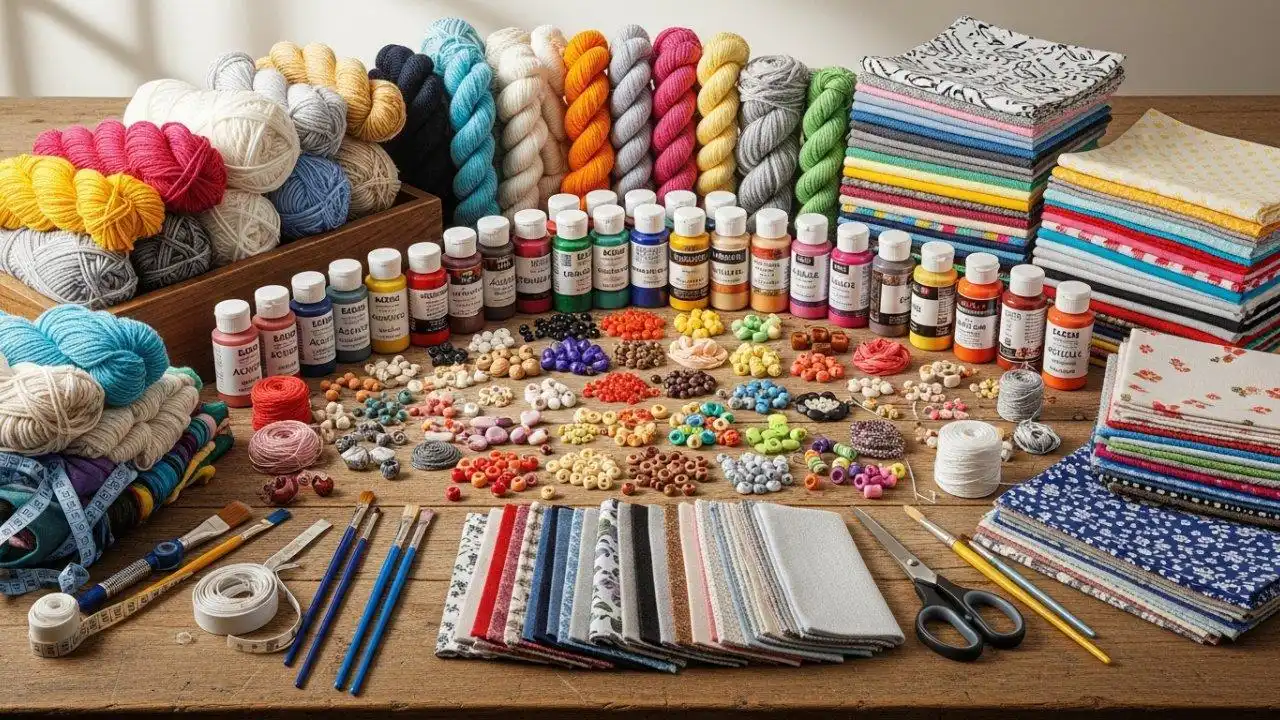
Manufacturers
Manufacturers produce goods and may offer product development or customization services, depending on their capabilities.
They can be suitable for businesses that require specific product specifications, custom artwork, packaging changes, or larger production orders.
Before working with a manufacturer, confirm which processes are handled in-house, which activities are outsourced, and how samples and production specifications are approved.
Do not assume that every manufacturer offers the same customization options or accepts small production quantities.
Wholesale Distributors
Wholesale distributors generally supply products from an established assortment. They may be suitable for retailers that want to purchase existing products without developing new designs.
Depending on the supplier, buyers may be able to source multiple product categories, replenish existing items, or select products for seasonal promotions.
Important considerations include catalog availability, order quantities, pricing arrangements, stock status, and repeat-order support.
Multi-Category Sourcing Partners
Some buyers need products across several categories rather than a single type of craft supply.
A multi-category sourcing partner may help coordinate product selection, supplier communication, packaging requirements, and order planning across different product groups.
This can be useful for businesses building broader collections of creative products, stationery, gift items, and children’s activity products.
Before selecting this model, clarify who is responsible for product specifications, quality checks, order consolidation, and delivery coordination.
The best supplier model depends on your business requirements. A retailer testing an existing product may need a different arrangement from a brand developing a customized collection.
How to Compare Craft Supplies Suppliers
Once you have identified potential suppliers, compare them using consistent criteria. This helps you evaluate the complete sourcing arrangement instead of choosing solely on the basis of product photographs or quoted prices.
Compare Product Range and Category Coverage
Start by listing the product categories your business needs.
Depending on your target market, these may include:
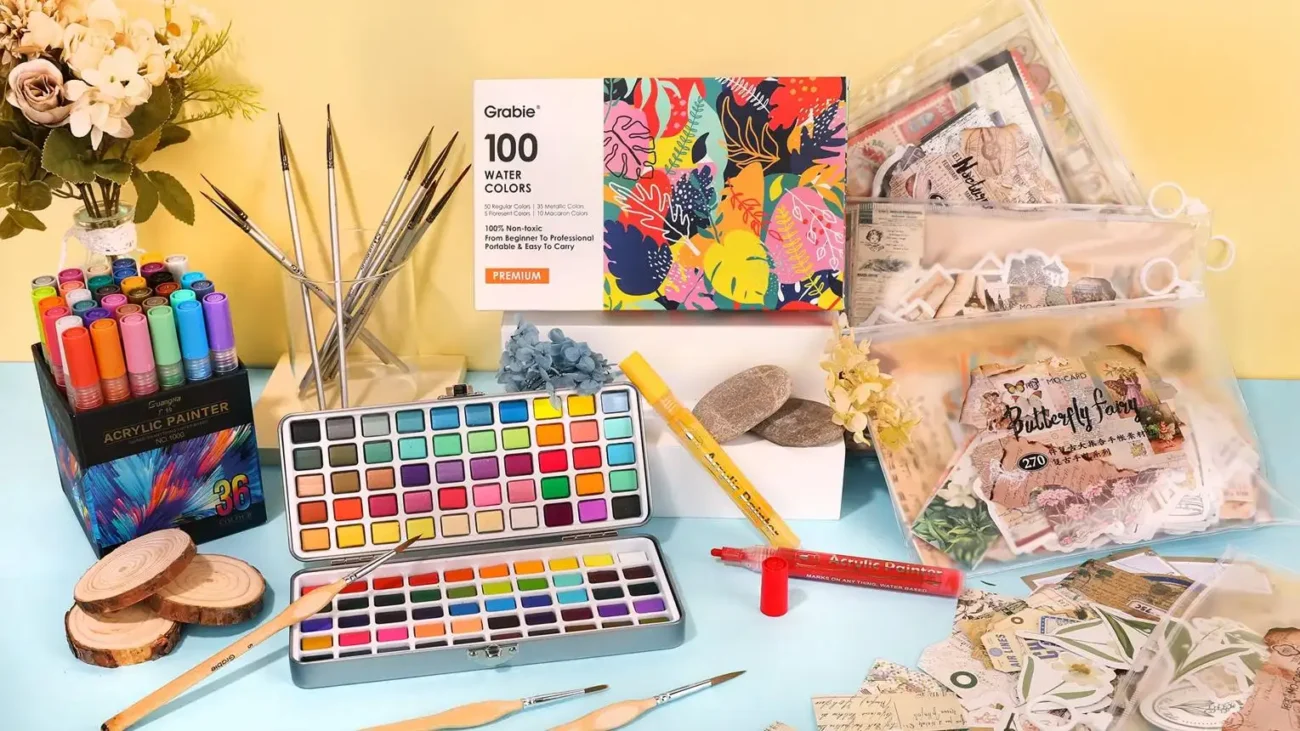
- Coloring and painting products
- Sticker books and creative activity sets
- Paper crafts and decorative products
- Jewelry-making kits and components
- Sewing, knitting, and textile crafts
- General DIY craft kits
- Educational and children’s creative products
Review each supplier’s assortment against your list.
A supplier with a broad catalog may simplify purchasing, but the products still need to match your customers’ preferences, price range, and intended use.
For businesses planning to expand their assortment over time, also consider whether the supplier can support additional categories as demand develops.
Review Minimum Order Quantities
Minimum order quantity (MOQ) is one of the most important purchasing conditions to clarify before requesting a quotation.
MOQ may apply to each product, SKU, design, color, or packaging format. Some suppliers may also offer mixed-SKU orders under specified conditions.
Ask suppliers to explain:
- The minimum quantity for each product
- Whether different designs can be combined
- Whether packaging has a separate MOQ
- Whether custom artwork requires additional quantities
- Whether the quoted quantity refers to individual units or complete sets
These details can significantly affect the size and cost of an order.
For more effective planning, compare the supplier’s MOQ with your expected sales, available storage, and budget.
Evaluate Samples and Product Specifications
Product photographs are useful for initial screening, but they cannot establish every aspect of quality.

When practical, request samples before committing to a substantial order. Compare them with the stated specifications and intended use.
Depending on the product, check:
- Dimensions and included components
- Materials and construction
- Printing and color consistency
- Product functionality
- Packaging and labeling
- Consistency with approved reference samples
For children’s craft products, determine which safety, labeling, and testing requirements apply to the product and destination market. In the United States, the Consumer Product Safety Commission’s guidance on toy safety and its guidance on art materials cover different product requirements. Buyers should identify which rules apply to the actual product rather than assuming that all craft materials are regulated in the same way.
For products intended for the European Union, consult the European Commission’s guidance on placing toys on the EU market when the product falls within the scope of toy safety rules.
Any supporting documentation should correspond to the actual product and its intended use. A general supplier statement is not a substitute for verifying applicable requirements.
Compare Packaging and Customization Options
Packaging can affect product presentation, protection during shipping, storage, and retail suitability.
Ask whether the supplier can support the packaging format you need, such as individual retail packs, header cards, gift packaging, or bulk packaging.
If you require customization, clarify the available options for artwork, colors, logos, labels, and product configurations.
OEM and ODM services may be relevant for businesses developing products under their own brand. However, the available services, minimum quantities, costs, and development timelines must be confirmed for each project.
For character-themed or licensed products, verify that the supplier has the necessary authorization for the intended market and sales channel.
Assess Communication and Supply Reliability
Reliable communication helps prevent misunderstandings during product selection, production, and shipment preparation.
When evaluating a potential supplier, consider whether it can provide clear answers about:
- Product specifications and available options
- Quotation details and order conditions
- Sample preparation and approval
- Production and delivery schedules
- Packaging and labeling requirements
- Repeat orders and specification changes
For international sourcing, also clarify the agreed shipping terms, export documentation responsibilities, and delivery arrangements.
When comparing international quotations, identify the agreed delivery term and named place. The International Chamber of Commerce’s Incoterms® rules overview explains how these rules allocate responsibilities, costs, and risks between buyers and sellers.
Lead times can vary according to product availability, order size, customization, and production schedules. Request realistic timelines for the complete order rather than relying on a general estimate.
Build a Shortlist of Potential Craft Supplies Suppliers
Instead of contacting a large number of suppliers without a plan, create a shortlist based on your actual purchasing needs.
Step 1: Define Your Requirements
Write down the categories you want to purchase, your target customers, expected order quantities, packaging needs, and destination markets.
If you need customization, identify which changes are essential and which are optional.
Step 2: Screen Supplier Capabilities
Review supplier catalogs, business information, product specifications, and ordering conditions.
Remove candidates that clearly do not support your product categories or purchasing requirements.
Step 3: Request Comparable Quotations
Send shortlisted suppliers the same product specifications and quantity assumptions.
A useful quotation request should identify the products, quantities, packaging, customization requirements, delivery destination, and expected schedule.
Using consistent requirements makes the quotations easier to compare.
Step 4: Verify Samples and Order Conditions
Where appropriate, review samples and clarify any outstanding questions about MOQ, packaging, quality requirements, and lead times.
Document the agreed specifications before confirming production.
Step 5: Evaluate Long-Term Suitability
A supplier should be evaluated not only on the first order but also on its suitability for future purchasing needs.
Consider whether it can support repeat orders, communicate product changes, maintain clear specifications, and accommodate reasonable assortment adjustments.
A smaller shortlist of suitable suppliers is often more useful than a large list of contacts that have not been properly evaluated.
Questions to Ask Before Placing a Wholesale Order
Before confirming an order, buyers should make sure that the main commercial and product requirements are clear.
| Area | Questions to Ask |
|---|---|
| Product range | Which categories and product configurations are available? |
| MOQ | Does the minimum quantity apply per SKU, design, or total order? |
| Pricing | What is included in the quotation, and which charges are additional? |
| Samples | Can samples be provided, and how is sample approval documented? |
| Materials | Which product specifications and applicable supporting documents are available? |
| Packaging | Can the packaging meet retail, labeling, and shipping requirements? |
| Customization | Which artwork, branding, and packaging changes are available? |
| Lead time | What are the expected sample, production, and shipment preparation times? |
| Shipping | Which shipping terms and export documentation arrangements can be supported? |
| Reordering | How are repeat orders and changes to approved specifications handled? |
The answers should be specific to the products and order under consideration. Avoid relying on general statements when a requirement needs written confirmation.
Common Mistakes When Sourcing Craft Supplies
Choosing Suppliers Based Only on Price
A low unit price may not reflect the total cost of purchasing, importing, storing, and selling a product.
Compare quotations using consistent specifications and quantities. Include applicable packaging, customization, freight, duties, and other relevant costs when estimating the total landed cost.
Selecting Products Without a Clear Customer Profile
Products that appeal to one customer group may not be suitable for another.
Before purchasing, identify the intended audience, sales channel, price range, and role of each product in your assortment.
This can help reduce unnecessary inventory and improve product selection.
Ignoring MOQ and Packaging Conditions
A supplier may offer attractive pricing but require separate minimum quantities for different designs or packaging formats.
Clarify these conditions before placing the order so that the actual purchasing commitment is understood.
Failing to Verify Product Requirements
Product suitability, safety, labeling, and testing requirements vary by product and destination market.
Confirm the applicable requirements before production and ensure that supporting documents relate to the actual products being purchased.
Focusing Only on the First Order
A supplier may be suitable for an initial purchase but less suitable for future assortment expansion or replenishment.
Discuss repeat-order procedures, specification retention, lead times, and communication expectations before establishing a longer-term sourcing relationship.
Frequently Asked Questions
What do craft supplies suppliers typically offer?
Craft supplies suppliers may offer art materials, painting sets, paper crafts, sticker activities, jewelry-making components, textile crafts, and DIY kits. The available assortment depends on the supplier’s business model and product specialization.
How can retailers find wholesale craft supplies suppliers?
Retailers can research supplier websites, product catalogs, B2B platforms, industry events, referrals, and relevant industry publications. Each potential supplier should then be evaluated against the retailer’s product range, purchasing conditions, and sourcing requirements.
What is the difference between a craft supplies manufacturer and a wholesaler?
A manufacturer produces goods and may offer development or customization services. A wholesaler or distributor generally supplies products from an established assortment. Some sourcing partners coordinate products from multiple categories, so buyers should confirm the actual responsibilities and capabilities of each business.
What should buyers check before placing a bulk craft supplies order?
Buyers should confirm product specifications, quantities, MOQ, quotation terms, packaging, applicable compliance requirements, delivery schedules, and any customization arrangements. Samples and written specifications can help establish clear expectations before production.
Can craft supplies suppliers support private-label products?
Some suppliers offer private-label packaging, branding, artwork, or product customization. Availability depends on the supplier and product. Buyers should confirm minimum quantities, development costs, artwork requirements, and production schedules before proceeding.
Should retailers work with one supplier or several suppliers?
The answer depends on the assortment and purchasing strategy. A multi-category sourcing partner may simplify coordination across related products, while multiple specialized suppliers may provide more suitable options for particular categories. Buyers should compare the total purchasing requirements and coordination effort before deciding.
Conclusion
Finding suitable craft supplies suppliers involves more than locating a product catalog or comparing unit prices. Retailers and distributors should evaluate product range, MOQ, samples, packaging, customization, communication, and supply arrangements before committing to an order.
A structured sourcing process helps businesses build a product assortment that matches their customers and sales channels while making purchasing requirements easier to manage.
Wandefu supports wholesale sourcing across children’s creative products, craft kits, stationery, and related categories. Explore our Arts, Crafts & DIY collection to review available products and discuss your purchasing requirements.
If you are planning a new collection, share your target product categories, estimated quantities, destination market, and branding requirements with our team. We can then discuss which available products and sourcing options may fit your needs.