
Ultimate Guide to Choosing Kids Stationery for School

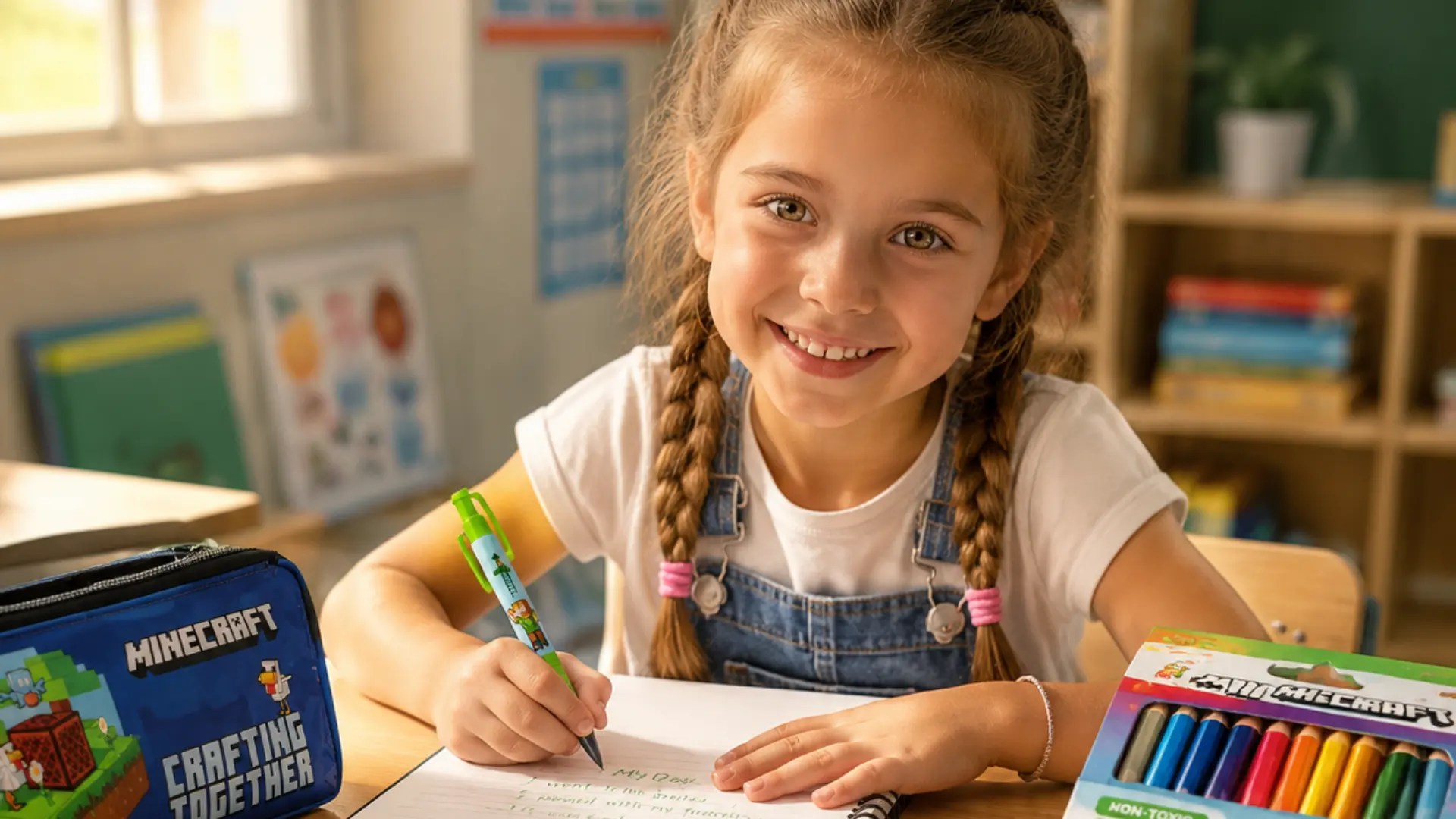
Selecting the right kids stationery for school is one of the most impactful decisions parents and educators make as the back-to-school season approaches. High-quality learning materials are far more than just simple writing instruments—they are fundamental tools that directly influence a child’s hand-eye coordination, cognitive development, classroom focus, and overall academic confidence. Providing a child with the proper stationery supplies can transform a frustrating learning experience into an engaging and joyful journey of discovery.
We understand the stress of back-to-school shopping—the crowded aisles, the confusing supply lists, and the pressure to get everything right. That’s why we’ve created this guide: to make choosing kids stationery simple, informed, and even enjoyable.
Furthermore, because these items are handled daily, placed in backpacks alongside lunches, and frequently come into close contact with a child’s skin, the physical and chemical safety of school stationery is absolutely critical. From preschool toddlers requiring chunky crayons to high school teenagers needing advanced organizational tools, every developmental stage demands a tailored approach to stationery supplies.
In this comprehensive ultimate guide, we will explore the expansive world of children’s stationery supplies. We will break down exactly what these items entail, provide a definitive back-to-school checklist, take an in-depth look at critical international safety standards (such as EN71 and ASTM), and recommend the best kids stationery for every age group. Additionally, for our B2B partners and independent retailers, Additionally, for our B2B partners and independent retailers, we will dive into the latest market trends and our wholesale sourcing, OEM/ODM, and private label support services. Whether you are a parent curating the perfect backpack or a global buyer sourcing high-margin inventory, this guide covers everything you need to know about kids stationery for school.
What Is Kids Stationery? A Complete Overview
In the modern educational landscape, kids stationery encompasses a vast, highly specialized ecosystem of learning aids, artistic materials, and organizational tools designed specifically for younger users. Understanding the specific function and material requirements of each category is the first step in creating a productive learning environment.
Notebooks: The foundation of knowledge retention. For children, notebooks must feature high-quality paper, typically a minimum of 80gsm (grams per square meter), to prevent ink bleed-through. The ruling (line spacing) also varies: wide-ruled lines are essential for early learners practicing their letters, while graph paper is necessary for older students tackling geometry.
Pencils: The irreplaceable starting point for early writers. Standard graphite cores come in various hardness levels, with HB (Number 2) being the universal standard for writing. Modern children’s pencils often feature hexagonal or triangular barrels to naturally enforce the correct tripod grip, reducing hand fatigue.
Pens: As children progress into middle and upper grades, they transition to permanent ink. Gel pens, rollerballs, and ballpoint pens with tip sizes ranging from 0.5mm to 0.7mm provide a smooth, skip-free writing experience. Ergonomic rubber grips are frequently added to prevent calluses during long writing sessions.
Erasers: High-quality children’s erasers are formulated using dust-free polymer technology. Unlike traditional rubber erasers that crumble into a messy powder, dust-free erasers roll graphite shavings into a single, easily disposable strand, keeping homework neat.
Rulers: Essential for math and drawing. Children’s rulers, typically 15cm to 30cm in length, should be manufactured from shatter-resistant polycarbonate or flexible acrylic to prevent dangerous sharp edges if broken.
Pencil Cases: The command center of a student’s desk. Modern pencil cases feature multi-compartment designs, internal mesh pockets, and elastic pen loops to teach children the importance of organization.
Markers & Coloring Books: Primary tools for color recognition and creative expression. For children, markers must be strictly formulated with washable, water-based inks for easy cleanup.
Art Supplies: This broad sub-category includes wax crayons, non-toxic water-based paints, and air-dry clay—crucial for tactile learning and developing three-dimensional spatial awareness.
Essential School Stationery Checklist for Parents
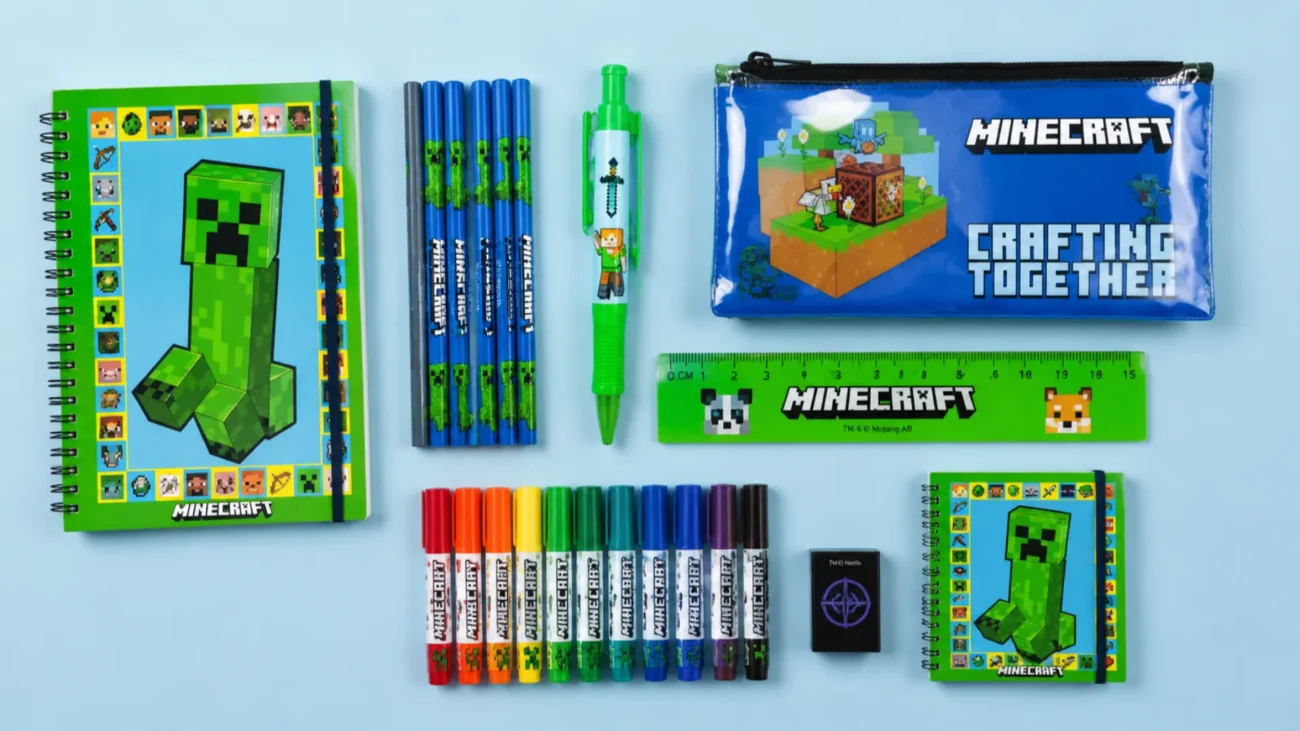
To ensure a smooth transition into the new academic year, we have compiled a definitive school stationery checklist. Parents and bulk purchasers can use this detailed table as a master reference when shopping for kids stationery.
| Category | Recommended Item Specification | Suggested Quantity | Key Buying Focus |
|---|---|---|---|
| Notebooks | A4 Spiral Composition Books (80gsm+) | 5–8 books | Paper quality; spiral binding allows book to lay flat |
| Pencils | HB / No.2 Graphite Wood Pencils | 20–30 pieces | Break-resistant cores; sustainably sourced wood |
| Pens | 0.5mm Blue/Black Gel Pens | 10–15 pieces | Quick-drying ink (essential for left-handed students) |
| Erasers | PVC-Free Polymer Erasers | 3–5 pieces | Phthalate-free; minimal pressure required |
| Rulers | 15cm & 30cm Shatterproof Rulers | 2 pieces | Metric and imperial markings; rounded edges |
| Scissors | 5-inch Blunt-tip Safety Scissors | 1 pair | Blunt-tip mandatory for elementary; ergonomic handles |
| Glue | Washable PVA Glue Sticks | 4–6 pieces | Acid-free; does not warp or wrinkle paper |
| Markers | 12 or 24-Color Washable Markers | 1–2 sets | Ventilated safety caps to prevent choking hazards |
| Folders | 2-Pocket Polypropylene (PP) Folders | 4–6 pieces | Waterproof and highly tear-resistant |
| Lunch Notes | Pre-printed mini encouragement cards | 1 pack | Boosts morale; eases midday separation anxiety |
This checklist covers all the essential stationery supplies your child needs to start the school year with confidence. Bookmark this page and use it as your go-to reference for every back-to-school season.
How to Choose Safe Stationery for Kids
When it comes to children’s products, safety is the ultimate, non-negotiable metric. Because children frequently chew on pen caps or rub their eyes after handling materials, substandard stationery supplies laden with chemical residues or physical flaws can pose severe health risks. Global search engines and leading e-commerce platforms heavily penalize non-compliant products. Here are the seven crucial safety indicators to demand when purchasing or sourcing kids stationery for school:
BPA-Free (Bisphenol A Free)
BPA is a chemical historically used to manufacture hard, clear plastics. However, it is a known endocrine disruptor that can interfere with a child’s hormonal development. When buying plastic rulers, hard-shell pencil boxes, or water bottles, the packaging must explicitly state that the product is completely BPA-Free.
PVC-Free (Polyvinyl Chloride Free)
Many inexpensive novelty erasers and flexible plastic pencil pouches are made from PVC. To make PVC soft and pliable, manufacturers often add phthalates (plasticizers). Phthalates can be absorbed through the skin and have been linked to reproductive toxicity. High-quality kids stationery replaces PVC with safe alternatives like TPR (Thermoplastic Rubber), silicone, or EVA foam.
EN71 Certification
If you are operating in or exporting to the European market, passing EN71 standards is legally mandated. European Commission Toy Safety Standards. For stationery, buyers must scrutinize two main sections:
- EN71-1: Tests mechanical and physical properties—ensuring caps don’t pose choking hazards and plastics don’t shatter into sharp points.
- EN71-3: Governs the migration of certain elements, strictly limiting the trace amounts of 19 toxic heavy metals (like lead, mercury, and cadmium) in paints, inks, and surface coatings.
ASTM D4236 Compliance
This is a stringent labeling standard mandated in the United States for art materials. When a box of crayons, watercolors, or markers displays the ASTM D4236 label, it means the chemical formulation has been rigorously reviewed by a certified toxicologist. It guarantees that the product contains no materials in sufficient quantities to cause acute or chronic health hazards. ASTM International Official Website.
Rounded Edges (Physical Safety)
Protecting children from physical abrasions is a core design philosophy. Compasses used for geometry must feature safety locks or retractable shields. Scissors must feature blunt, rounded tips. Even the corners of plastic rulers should be mechanically chamfered (rounded off) to eliminate sharp right angles. When evaluating kids stationery, always check for rounded edges on any rigid component.
Non-Toxic Formulations
“Non-toxic” should not just be a marketing buzzword; it must be backed by transparent material safety data. This requires that the volatile organic compounds (VOCs) found in correction fluids and permanent markers are entirely free from harmful chemicals like benzene, formaldehyde, and toluene.
Food-Grade Materials
While stationery is not intended for consumption, the reality of school life means pencil cases are shoved into bags next to unwrapped sandwiches, and anxious students chew on their erasers. Premium manufacturers of kids stationery are increasingly using FDA-approved, food-grade silicone to manufacture pen grips and flexible pencil cases.
Recommended Kids Stationery for Different Ages
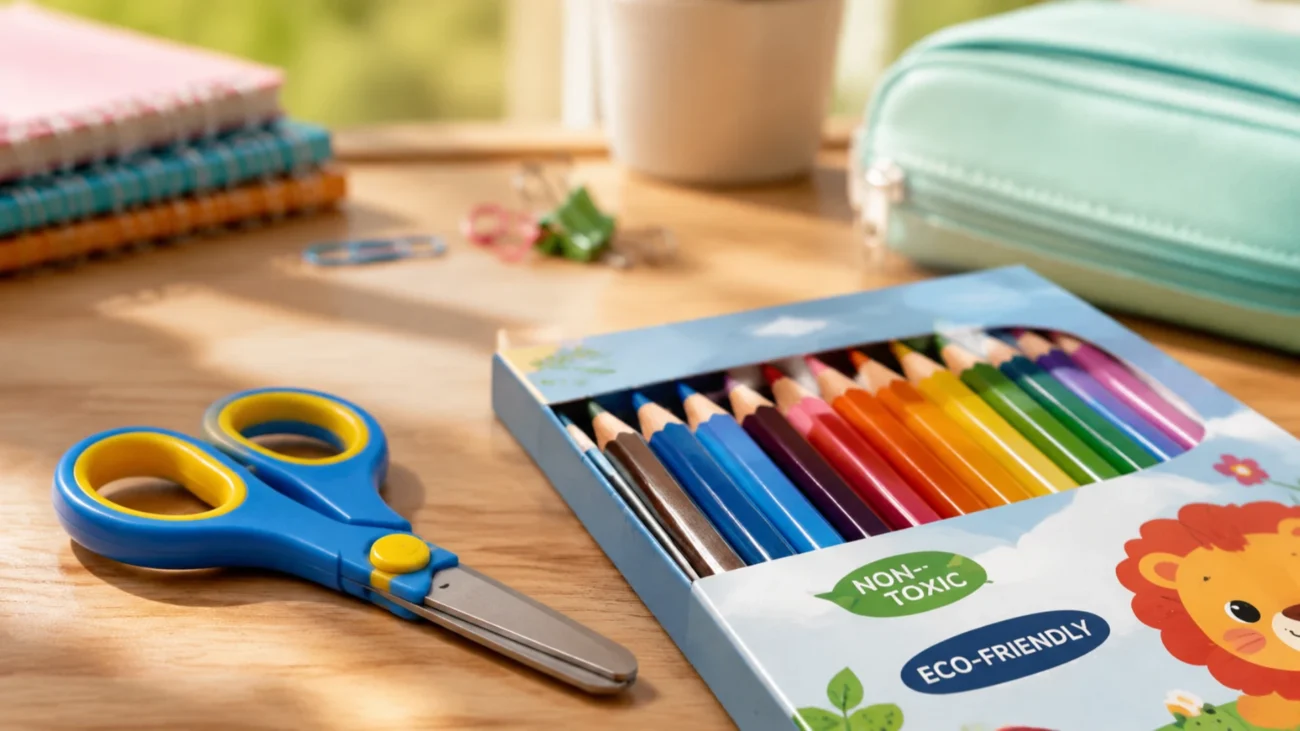
A child’s cognitive ability, muscle control, and academic workload undergo massive transformations as they grow. Consequently, applying a “one-size-fits-all” approach to school stationery is highly inefficient. Here are our age-specific recommendations for kids stationery.
Ages 3-5 (Preschool and Kindergarten)
At this early stage, the primary objective is the development of fine motor skills, color recognition, and tactile exploration, not precise handwriting.
- Recommended: Jumbo-sized triangular pencils (approximately 10mm in diameter), ultra-washable broad-line markers, plastic spring-loaded safety scissors, and heavy-stock coloring books.
- Key Features: Durability, ease of grip, and extreme washability.
Ages 6-8 (Early Elementary School)
Children now enter the critical phase of learning spelling, grammar, and foundational mathematics. This is the ideal time to invest in a coordinated kids stationery set. Explore our curated kids stationery sets
- Recommended: Standard HB wooden pencils, large block dust-free erasers, 15cm shatterproof rulers, and a comprehensive kids stationery set with matching items.
- Key Features: A coordinated set minimizes classroom distractions, helps children identify their belongings, and fosters a sense of responsibility.
Ages 9-12 (Upper Elementary and Middle School)
Students must juggle multiple subjects, making logical organization the key to success.
- Recommended: Retractable gel pens (red, blue, black), bright highlighters, dedicated geometry sets (compasses and protractors), multi-compartment pencil cases, and color-coded PP folders.
- Key Features: Organizational capabilities and versatile, fast-drying writing instruments.
Teenagers (High School and Beyond)
Kids stationery needs become highly specialized, technology-integrated, and deeply tied to personal self-expression—though at this stage, we often refer to them as school stationery for mature students.
- Recommended: Advanced scientific calculators, detailed weekly planners, refillable binder notebooks, and personalized stationery such as monogrammed journals or custom-engraved pens.
- Key Features: Material quality, personal aesthetic preference, and individuality.
Popular Cartoon School Supplies for Kids
Capitalizing on IP-licensed cartoon kids stationery is one of the most effective strategies to boost a child’s enthusiasm for attending school. For retailers, stocking these high-demand properties during the back-to-school rush guarantees high conversion rates.
- Hello Kitty: An enduring global icon. The signature pink aesthetic translates exceptionally well to multi-tiered pencil boxes, mechanical pencils, and sticker sheets.
- Disney Princess: Encompassing beloved characters from Elsa to Cinderella. Most successfully deployed in premium gift sets with lock-and-key diaries and glitter gel pens.
- Stitch: The mischievous blue alien has seen a massive resurgence in popularity. Stitch-themed canvas pencil cases and plush-topped pens are current top sellers.
- Minecraft: The pixelated block aesthetic perfectly aligns with the boy demographic. Items featuring the green Creeper or pixelated swords are highly sought after.
- Mario: The energetic Super Mario franchise is heavily utilized on large-capacity double-layer pencil cases and durable notebooks.
Retailers building a Stitch-led stationery assortment can also compare this Stitch plush notebook as a softer, gift-oriented notebook format.
For notebook assortments, this Mario spiral notebook provides another example of translating a recognizable character theme into an everyday school paper product.
Back-to-School Stationery Trends for 2026
The kids stationery market is as dynamic as fast fashion, driven by social media aesthetics and shifting consumer values. Staying ahead of these trends allows independent brands to optimize their product sourcing and parents to choose what’s current and engaging.
1. Pastel and Muted Color Palettes
The era of high-saturation neon colors is fading. Today’s students and parents heavily favor soothing pastel tones—mint green, dusty rose, lavender, and muted mustard. Educational psychologists suggest these calming colors help reduce visual overstimulation and anxiety in the classroom.
2. The Kawaii Aesthetic
Originating from Japan, cute stationery continues to dominate search volumes and social media platforms like TikTok and Instagram. Think gel pens topped with squishy silicone animal figures, pencil cases shaped like boba tea cups, and sticky notes featuring smiling anthropomorphic food items. The kawaii trend has become a significant driver in the kids stationery category. Shop our cute stationery collection
3. Eco-Friendly and Sustainable Materials
As climate awareness becomes a core part of school curriculums, eco-conscious stationery supplies are rapidly becoming standard. Products include notebooks made from FSC-certified recycled paper, pencil pouches woven from recycled PET plastic bottles, and wood-free pencils manufactured from recycled newspaper.
4. Personalized Customization
Parents are increasingly willing to pay a premium for personalized stationery for their children. This includes laser-engraving a child’s name onto pencils (drastically reducing loss at school), custom-printing artwork onto notebook covers, or embroidering initials onto canvas pencil cases. Personalized kids stationery makes a thoughtful gift and a practical investment.
5. Large Capacity, Multi-Functional Pencil Cases
Traditional single-layer metal tins are obsolete. Today’s students demand high-capacity, expandable pouches made of durable oxford cloth. These “transformer” cases can hold up to 50 pens, scissors, correction tape, sticky notes, and even a small calculator—making them the ultimate organizational tool in kids stationery.
6. STEM-Integrated Educational Tools
Stationery supplies are increasingly crossing boundaries to integrate with STEM (Science, Technology, Engineering, and Mathematics) education. We are seeing rulers embedded with simple circuit boards or mechanical pencils that require children to assemble internal spring mechanisms themselves, fostering engineering logic through everyday school stationery use.
Wholesale Kids Stationery for Retailers and Schools
As a premier, specialized stationery supply chain platform, Wandefu provides end-to-end B2B solutions for global stationery retailers, campus bookstores, and cross-border e-commerce sellers. We understand the logistical and manufacturing pain points of B2B clients sourcing kids stationery in bulk, which is why we offer highly adaptable partnership models:
Flexible MOQ (Minimum Order Quantity)
While we seamlessly handle massive shipping container orders for major retail chains, we also offer competitive, low-MOQ support for boutique retailers and independent websites testing new markets. This allows you to sample various kids stationery sets without tying up excessive capital.
Comprehensive OEM & ODM Services
- OEM (Original Equipment Manufacturer): If you have precise design blueprints and material specifications, our state-of-the-art manufacturing facilities execute tooling, injection molding, printing, and assembly with flawless precision for your kids stationery line.
- ODM (Original Design Manufacturer): Lacking an in-house design team? Our R&D center holds hundreds of pre-designed, safety-certified, and market-tested public molds. You simply select the base models, and we modify colors, patterns, and packaging to suit your audience.
Private Label Services
We take our highest-quality, unbranded stationery supplies and professionally apply your designated logo and brand colors. Our private label services ensure your brand identity is flawlessly printed on every item, allowing you to command brand loyalty, achieve higher profit margins, and escape the race-to-the-bottom pricing of generic goods.
Custom Printing & Retail Packaging
We utilize advanced printing technologies including silk-screen, heat transfer, and high-resolution UV printing. Whether your strategy requires peg-hook blister packs for physical retail, crush-resistant corrugated color boxes for e-commerce shipping, or minimalist kraft paper envelopes, we engineer the perfect packaging solution for your kids stationery products. Contact our wholesale team for a customized quote
Quick Takeaways: Choosing the Best Kids Stationery
Before we wrap up, here’s a quick reference summary of the most important points from this guide:
- ✅ Prioritize safety first—always check for BPA-Free, PVC-Free, EN71, and ASTM certifications on kids stationery.
- ✅ Match supplies to age—what works for a preschooler won’t work for a teenager. Choose age-appropriate school stationery.
- ✅ Use a checklist—our table above covers all essential stationery supplies for a successful school year.
- ✅ Follow the trends—pastel colors, kawaii designs, eco-friendly materials, and personalization are driving the 2026 kids stationery market.
- ✅ Consider wholesale—if you’re a retailer or school buyer, flexible MOQ and private label services make bulk sourcing simple and profitable.
Frequently Asked Questions About Kids Stationery
1. What stationery do kids need most for a successful school year?
The absolute foundational items include wide-ruled notebooks for knowledge retention, a bulk supply of HB graphite pencils, dust-free polymer erasers, a shatterproof ruler, and a durable, multi-compartment pencil case. As students progress, gel pens and highlighters become equally essential. Investing in quality kids stationery from the start saves money on replacements later.
2. How many notebooks should children realistically have per semester?
A safe standard is one dedicated notebook for each core subject (Math, Science, Language Arts, History), plus an additional 2 to 3 notebooks reserved for homework drafting. Generally, preparing 5 to 8 notebooks per semester is optimal for most school stationery lists.
3. What stationery is suitable and safe for preschool kids?
Preschoolers require jumbo-sized triangular pencils, broad-tipped markers with ultra-washable, non-toxic ink, and all-plastic, blunt-tip safety scissors. Strictly avoid any small items like standard pencil sharpeners or tiny erasers to eliminate choking hazards. Safety-certified kids stationery is non-negotiable at this age.
4. What is the safest stationery material to look for on labels?
For plastic components, the safest materials are FDA-approved food-grade silicone, TPR, and any plastics explicitly marked “BPA-Free” and “PVC-Free”. For pigments and inks, look for “Non-toxic” backed by EN71-3 or ASTM D4236 certifications. These labels should be visible on all quality stationery supplies.
5. How often should school stationery be replaced?
Consumable items—pencils, erasers, glue sticks, and pens—typically need replenishing several times per semester. However, durable goods like shatterproof rulers, stainless steel scissors, and high-quality pencil cases can last one to two full academic years if not physically damaged. Regular inspection of your child’s kids stationery ensures they’re always prepared.
6. Why are ergonomic designs so important in a kids stationery set?
Children’s skeletal and muscular systems are still developing. Ergonomic designs—such as triangular grip zones on pencils—drastically reduce muscle strain, preventing hand fatigue and significantly improving handwriting neatness. This is why premium kids stationery invests heavily in ergonomic research.
7. Are personalized stationery sets actually worth the extra cost?
Absolutely. From a psychological standpoint, personalized stationery gives children a strong sense of ownership and boosts confidence. From a practical standpoint, having a child’s name permanently printed on stationery supplies virtually eliminates loss in busy classrooms. It’s a small premium that pays for itself in reduced replacements.
8. Do you offer wholesale kids stationery for international buyers?
Yes, Wandefu specializes in robust wholesale services for global B2B clients. We offer dozens of pre-configured kids stationery sets across various themes, age groups, and price points. Our flexible MOQ means we can serve both small boutique retailers and large chain stores. Plus, our deep OEM/ODM customization capabilities ensure your stationery supplies perfectly match your specific retail environment and target demographic. We ship worldwide with reliable logistics partnerships.
9. What defines “cute stationery” in the 2026 market?
In 2026, cute stationery blends the Japanese Kawaii aesthetic with interactive, tactile elements—low-saturation pastel colors, slow-rebound squishy silicone figures on pen caps, and rulers containing flowing liquid glitter. It’s about combining functional utility with high emotional value. Cute stationery consistently ranks among the highest-converting categories in kids stationery retail.
10. Why are STEM kits increasingly considered part of modern school stationery?
Modern education prioritizes hands-on, cross-disciplinary learning. STEM-integrated stationery supplies transform ordinary writing tools into interactive educational manipulatives—helping children organically absorb engineering logic during their everyday school routines. This trend is reshaping how we define school stationery for the next generation, moving beyond traditional writing tools into multifunctional learning aids.
Conclusion: Choose the Best Kids Stationery for Your Child’s Success
Equipping a child with a carefully curated set of kids stationery—one scientifically tailored to their developmental stage, academic needs, and personal interests—is one of the highest-return investments you can make in their educational journey. From rigorously verifying that materials are BPA-free and meet EN71 safety standards, to selecting ergonomic tools that prevent hand fatigue, every single purchasing decision matters.
Furthermore, tapping into trends like cute stationery and personalized stationery can transform homework from a dreaded chore into a delightful, engaging activity. When children feel excited about their stationery supplies, they approach their studies with greater enthusiasm and pride.
We hope this Ultimate Guide provides you with a clear, authoritative roadmap for navigating the massive back-to-school market. Whether you are a parent seeking the perfect individual product or a retailer requiring a reliable overseas manufacturing partner for wholesale customization, Wandefu is your definitive industry resource for kids stationery.
Ready to get started? Browse our complete collection of safety-certified kids stationery today, or contact our B2B team for a customized wholesale quote within 24 hours. Your child’s best school year starts with the right tools—and we’re here to help you find them. Browse our complete kids collection.