
Licensed Merchandise Guide for Retailers: Character School Supplies & Stationery

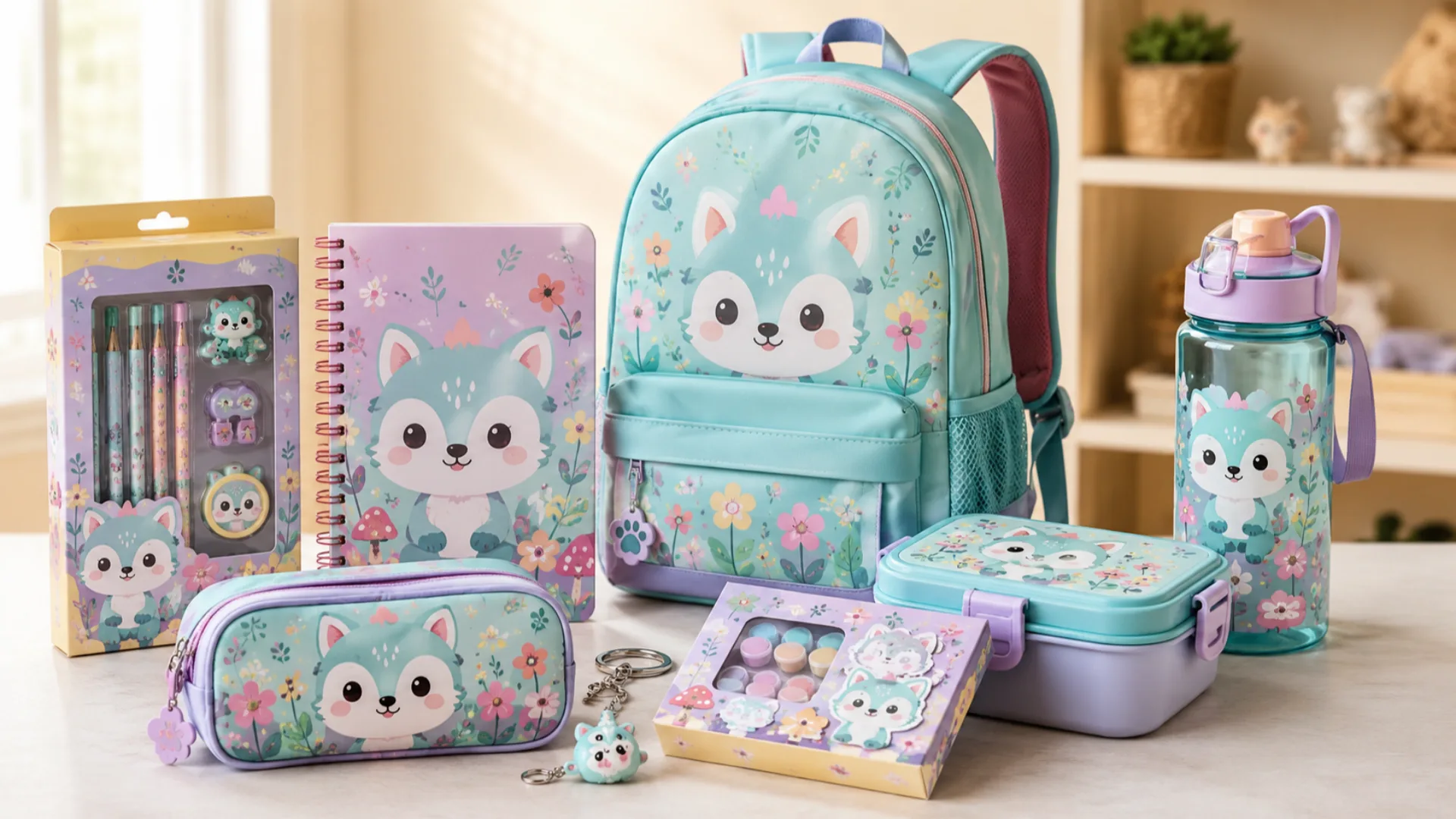
Character school supplies can look straightforward from the outside. A notebook carries a familiar character. A pencil case uses recognizable artwork. A backpack, water bottle, lunch box, or craft kit follows the same visual theme.
For retailers, importers, and distributors, however, sourcing licensed merchandise involves much more than selecting attractive artwork and comparing unit prices.
The buyer needs to understand who controls the intellectual property, how the supplier is connected to the authorization, which products the arrangement covers, where the products can be sold, whether specific sales channels are included, how artwork and packaging are approved, and whether the authorization remains current when the order is produced or repeated.
This becomes particularly important in school supplies because one character can appear across many product categories. Character stationery, pencil cases, backpacks, lunch products, craft kits, storage items, and accessories may look like one coordinated collection, but buyers should not assume that authorization for one category automatically extends to every other category.
Retailers also need to distinguish licensed products from original character designs. A cute cartoon-style notebook can use completely original artwork and involve no third-party character license. A product using protected third-party character artwork, trademarks, names, logos, or other IP assets requires a different sourcing process.
The World Intellectual Property Organization describes merchandising as a specialized form of IP licensing in which the owner of a trademark, design, or copyright permits another party to apply that IP to consumer goods. Retailers who want a broader foundation can review WIPO’s official explanation of IP assignment, licensing, and merchandising.
This guide explains what licensed merchandise is, how licensing can operate through a retail supply chain, what retailers should verify before ordering, how artwork and SKU control can be managed, and how to sell licensed products through a more disciplined sourcing process.
It is a procurement and due-diligence guide, not legal advice. The exact rights and obligations always depend on the relevant intellectual-property rights, contracts, territories, applicable laws, and commercial arrangements.
What Licensed Merchandise Means for Retailers
Before reviewing suppliers or samples, buyers need a clear definition of the product model they are dealing with.
What Is Licensed Merchandise?
Licensed merchandise is consumer merchandise that uses intellectual property under an authorization or licensing arrangement.
Depending on the program, that intellectual property may include:
- Character artwork
- Trademarks
- Character names
- Logos
- Copyright-protected illustrations
- Graphic assets
- Designs
- Brand elements
- Other protected creative material
The physical product itself may be completely ordinary.
A notebook does not become a different type of notebook because it uses licensed artwork. What changes is the rights and approval framework around its design, production, distribution, and sale.
That distinction affects how retailers evaluate the product.
What Are Licensed Products?
For buyers asking what are licensed products, the most useful definition is:
Licensed products are products that use protected third-party IP within an applicable authorization arrangement.
Examples can include:
- Character notebooks
- Pencil cases
- Stationery sets
- Backpacks
- Lunch bags
- Water bottles
- Lunch boxes
- Craft kits
- Keychains
- Decorative accessories
The important factor is not whether the product looks official.
The buyer needs to understand why the party supplying the goods is entitled to supply that IP on that particular product.
Licensed Products vs. Original Character Products
Original character products can look very similar to licensed products.
For example, a supplier may develop its own:
- Animal mascot
- Cute cartoon girl
- Fantasy creature
- Graphic character family
- Original school theme
If that design is legitimately original and does not depend on third-party protected IP, the product should not be described as third-party licensed merchandise merely because it contains a character.
A retailer should therefore distinguish between:
Original character product: artwork is created or legitimately controlled by the supplier, customer, or another authorized creator.
Licensed character product: third-party intellectual property is being used under an applicable authorization arrangement.
Both models can support attractive school-product collections, but their documentation and development processes are different.
Licensed vs. Unauthorized Character Products
A familiar-looking character or professional package does not itself prove that a product is authorized.
Retailers should be cautious when a supplier describes a product using vague phrases such as:
- Famous character style
- Inspired by popular cartoon
- Similar character
- Export character version
- Same design as the original
- Modified version
Character protection can involve overlapping intellectual-property rights, including copyright and trademarks. WIPO notes that character merchandising can bring several forms of IP together, making the underlying rights more complex than the appearance of the product alone suggests.
The practical sourcing response is simple:
verify the source of the rights instead of judging authorization from appearance.
How Product Licensing Works in a Retail Supply Chain
There is no single universal licensing chain.
The structure depends on the IP owner, licensing program, product category, territory, manufacturer, and distribution arrangement.
However, four roles are particularly useful for retail buyers to understand.
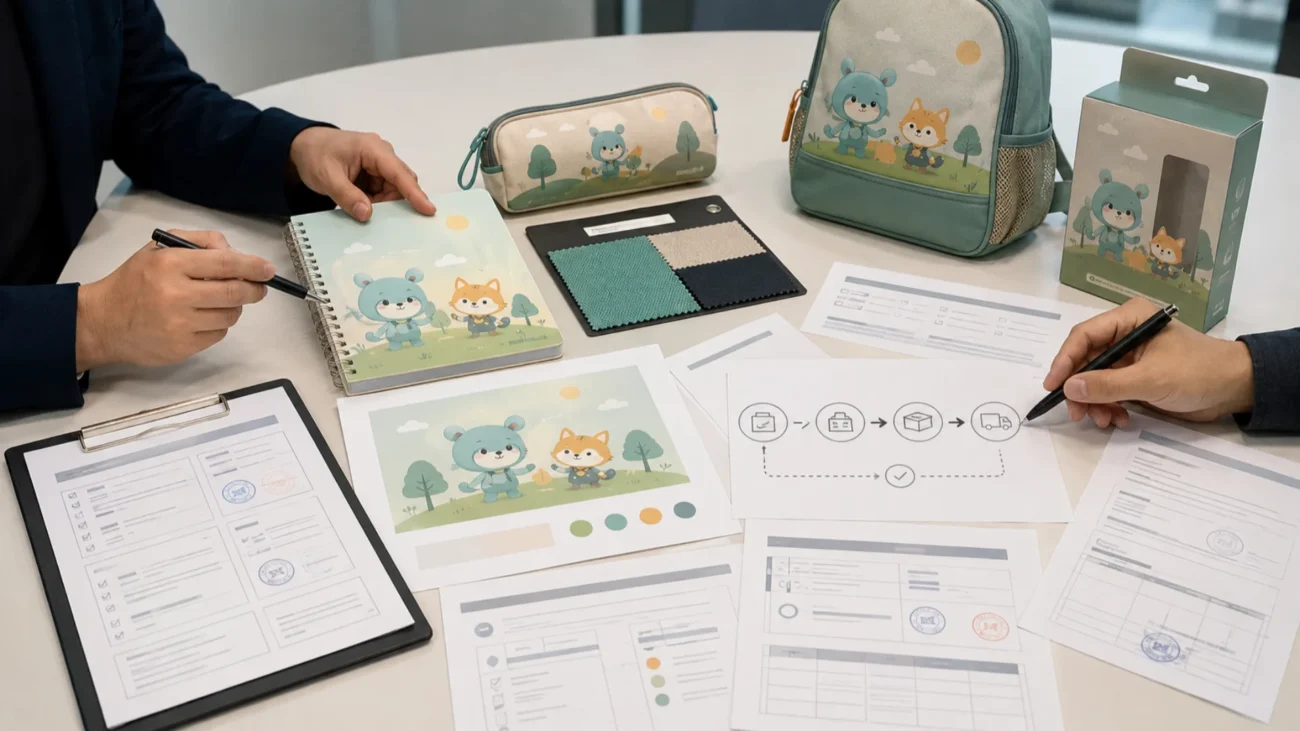
IP Owner or Licensor
The licensor owns or controls the relevant intellectual property or has authority to grant the relevant rights.
The assets may involve:
- Trademarks
- Copyright works
- Character artwork
- Designs
- Logos
- Other brand assets
A trademark, for example, helps identify and distinguish the goods or services of one enterprise, and registered trademark rights can be licensed to another party. Buyers can review WIPO’s overview of trademarks and trademark rights for additional background.
Licensee
The licensee receives defined rights under a licensing arrangement.
Those rights may be limited by:
- Product category
- Territory
- Time period
- Approved trademark or artwork
- Distribution model
- Other contractual conditions
Retail buyers should therefore avoid treating the word “licensee” as meaning “unrestricted worldwide right to make every type of product.”
The scope matters.
Manufacturer or Supplier
The physical manufacturer may operate under several different models.
A factory might be:
- Producing for a licensee
- Producing under customer-provided authorization
- Participating in an approved manufacturing arrangement
- Supplying products through another authorized commercial party
- Producing only original character products and holding no third-party character license
WIPO’s trademark-licensing materials recognize that a licensee can work with a third-party manufacturer, while quality control and the actual licensing arrangement remain important.
The retailer therefore needs to understand the supplier’s role, not simply ask, “Are you licensed?”
Retailer or Distributor
The retailer or distributor purchases and resells the finished goods.
Even when the retailer is not itself the principal licensee, it should still understand:
- What is being supplied
- Who is supplying it
- Which product scope applies
- Which destination market is intended
- Whether the contemplated sales method fits the commercial arrangement
A Practical Authorization Map
A procurement team can document the relationship as:
| Stage | What the Buyer Should Understand |
|---|---|
| IP Owner / Licensor | Who controls the relevant IP |
| Licensee | Who received the applicable commercial rights |
| Manufacturer | Who is authorized or engaged to produce the goods |
| Distributor / Supplier | Who is commercially supplying the retailer |
| Retailer | Where and how the buyer intends to sell the products |
The structure may contain more or fewer parties, but documenting the roles makes inconsistencies easier to spot.
Licensed Character Stationery and School Supplies
The broader keyword licensed merchandise covers many industries. For Wandefu’s product context, the most relevant applications are school, stationery, craft, bag, tableware, storage, and accessory products.
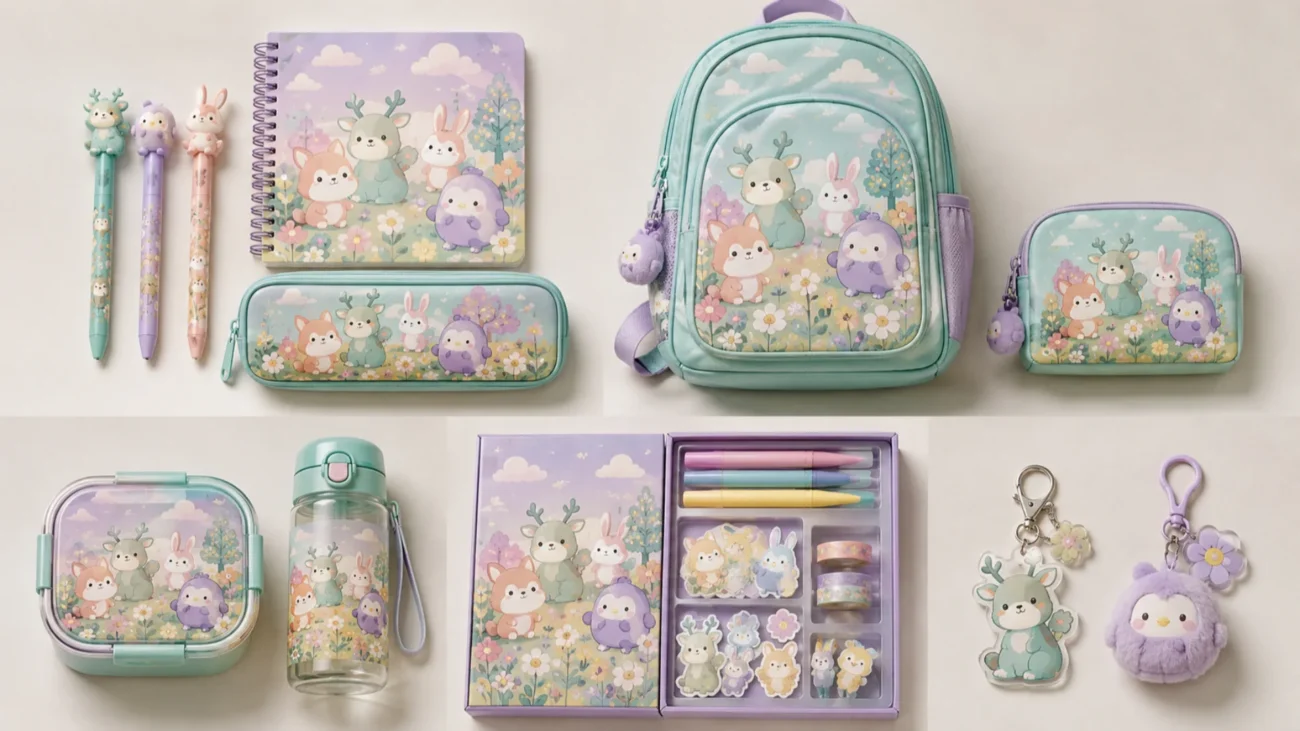
Character Stationery
Character stationery may include:
- Pens
- Pencils
- Erasers
- Rulers
- Sharpeners
- Notebooks
- Memo pads
- Pencil cases
- Stationery sets
- Stickers
A retailer should verify whether the applicable arrangement covers the actual product being ordered.
For example, authorization relating to notebooks should not automatically be interpreted as authorization for pencil cases unless the relevant scope supports both.
Retailers planning coordinated stationery collections can also use our kids stationery set buying guide to compare product combinations, packaging, samples, and retail assortment planning. The current Wandefu stationery range includes notebooks, pencil cases, stationery sets, pens, pencils, stickers, planners, and other character-themed school products.
Bags
Character school collections can also include:
- Backpacks
- Lunch bags
- Pencil pouches
- Small handbags
- Crossbody bags
- Other children’s bags
The artwork may interact with:
- Zippers
- Seams
- Pockets
- Handles
- Embroidery
- Patches
- Hardware
This means artwork approval and physical-product quality control often need to be reviewed together.
Tableware
School tableware can include:
- Lunch boxes
- Water bottles
- Snack containers
- Food containers
Licensing approval does not replace the normal product requirements applicable to the physical item.
A licensed lunch box still needs appropriate material, construction, closure, labeling, and destination-market review.
Arts and Crafts
Licensed creative products may include:
- Coloring books
- Activity books
- Sticker products
- Painting sets
- Craft kits
- Art sets
These products can contain multiple character applications.
For example, a craft kit might use licensed artwork on:
- Outer packaging
- Instruction sheets
- Stickers
- Printed craft components
- Activity sheets
Buyers should identify which elements are actually covered by the artwork approval process.
Accessories
Character collections can extend into:
- Keychains
- Bag charms
- Bracelets
- Hanging ornaments
- Small collectible accessories
- Decorative add-ons
Wandefu’s current site structure includes character-oriented accessories as a separate commercial category, so buyers building a multi-category licensed range should evaluate accessory scope separately from stationery.
Coordinated Back-to-School Collections
Retailers may eventually combine:
- Backpack
- Pencil case
- Notebook
- Stationery set
- Lunch box
- Water bottle
- Accessory
into one coordinated character range.
Buyers planning wider school collections can use our complete back-to-school essentials guide to understand how stationery, bags, lunch products, storage, crafts, and accessories fit into one seasonal assortment.
The important licensing principle remains unchanged:
a visually coordinated collection does not prove that every category shares the same authorization scope.
Original Character Products vs. Licensed Character Products
Buyers often encounter both models from the same manufacturer.
Understanding the difference helps prevent confusion before artwork development begins.
Original Artwork
Original artwork may be:
- Created by the supplier
- Commissioned by the retailer
- Developed by an independent designer
- Owned by the buyer
- Part of a retailer’s own character brand
The buyer should still clarify who owns the artwork and what usage rights exist.
“Original” should not simply mean “we changed an existing popular character enough.”
Licensed IP
Licensed-IP products involve third-party intellectual property.
The development process can therefore include additional controls such as:
- Approved assets
- Style guides
- Product-category limitations
- Territory limitations
- Artwork review
- Packaging review
- Quality requirements
- Approval records
The exact requirements depend on the actual program.
Buyer-Held Authorization
A retailer, distributor, or brand owner may hold the relevant authorization and engage a manufacturer to produce the goods.
In this model, the buyer may provide:
- Approved artwork
- Product specifications
- Style guide
- Packaging requirements
- Approval instructions
The manufacturer should use those assets only within the permitted production arrangement.
Receiving an artwork file does not give the factory unrestricted rights to use it for other customers or products.
Supplier-Held or Upstream Authorization
In another model, the supplier or an upstream party may have authorization covering defined licensed products.
The retailer should then understand:
- Which IP is covered
- Which categories are covered
- Which products are available
- Which markets are covered
- Whether any channel restrictions or requirements apply
- Whether the authorization is current
Wandefu’s current Licensed Character Products page presents licensed character collections across stationery, bags, crafts, storage, tableware, and accessories while explicitly stating that availability, customization, and project scope depend on order review and applicable authorization requirements.
Why the Sourcing Model Matters
The model affects:
- Who provides artwork
- Who submits approvals
- Who controls style-guide compliance
- Which documents are available
- Who communicates with the licensor or licensee
- How product changes are handled
- How reorders are reviewed
Do not wait until mass production to identify which model applies.
What Retailers Should Verify Before Sourcing Licensed Merchandise
This is the most important B2B section of the guide.
Before confirming a licensed-product order, buyers should document six core areas.
1. Identify the IP and Rights Source
Start with the product itself.
Record:
- Character or brand
- IP owner or controlling party
- Supplier
- Product category
- Specific SKU
Do not begin with a vague description such as:
“cartoon stationery.”
The rights review should correspond to a defined IP and defined product.
2. Understand the Authorization Chain
A practical authorization map might look like:
Licensor → Licensee → Manufacturer / Distributor → Retailer
But the real structure may differ.
The buyer should obtain documentation appropriate to the actual sourcing model and understand how the supplier is connected to the rights arrangement.
Avoid demanding one supposedly universal “license certificate.” Different programs may document authorization differently.
3. Confirm Product Scope
Ask which product categories are covered.
Possible categories include:
- Stationery
- Bags
- Tableware
- Crafts
- Accessories
- Storage
- Other goods
Then match those categories with the actual purchase order.
A notebook, pencil case, water bottle, and backpack should not be treated as one product simply because they share artwork.
4. Confirm Territory
Licensing rights can be territorially limited.
WIPO’s educational trademark-licensing materials describe licensing arrangements that can define geographic scope alongside duration, goods, and other conditions.
Retail buyers planning international distribution should therefore confirm whether the proposed destination market fits the actual arrangement.
Do not assume:
- U.S. rights equal EU rights
- Domestic sales rights equal export rights
- One regional right equals worldwide distribution
5. Confirm the Intended Sales Channel Where Relevant
Depending on the agreement, commercial arrangements may distinguish between sales methods or distribution models.
Potential channels can include:
- Physical retail
- Brand-owned website
- Marketplace
- Distributor network
- Promotional use
Not every program uses the same restrictions.
The correct question is:
Does our intended method of sale fit the applicable commercial arrangement?
6. Confirm Timing
Record relevant dates and review them against:
- Sample approval
- Production
- Shipping
- Launch
- Reorder timing
A previous order should not be treated as proof that every future production run remains covered.
Product Category and SKU Scope
Broad authorization questions become easier when procurement works at SKU level.
Build an SKU Authorization Matrix
Use a simple table:
| SKU | Product | IP | Product Category | Artwork Version | Packaging Version | Authorization Status |
|---|---|---|---|---|---|---|
| ST-001 | Notebook | Character A | Stationery | A03 | P02 | Confirmed / Pending |
| BG-001 | Backpack | Character A | Bags | A06 | P01 | Confirmed / Pending |
| TW-001 | Bottle | Character A | Tableware | A04 | P03 | Confirmed / Pending |
The exact format can vary.
The purpose is to prevent several visually similar products from being treated as one approval.
Approved Product Categories
Check how the product category is defined in the applicable arrangement.
Terms can be broad or narrow.
For example:
- Stationery
- Writing instruments
- Paper products
- Bags
- Food containers
Do not reinterpret a narrow category more broadly simply because the products are sold together at retail.
SKU-Level Approval
Some programs may require individual product designs or SKUs to be reviewed.
Others may operate differently.
Retailers should therefore ask:
- Is category authorization sufficient?
- Does each new design need review?
- Does each new SKU need review?
- Does a color variation need review?
- Does a new product shape need review?
Do not write an internal sourcing rule saying “every licensed SKU always requires licensor approval” unless that is true for the specific program.
Product Extensions
Suppose a successful pencil case is followed by a backpack using the same artwork.
That should trigger a scope check.
The questions are:
- Is the new category covered?
- Is new artwork needed?
- Does the application change?
- Is a new sample needed?
- Does packaging require another review?
Bundles and Sets
Licensed school supplies are often sold as sets.
For example:
- Notebook + pen
- Pencil case + stationery
- Backpack + pencil case
- Lunch box + bottle
Check whether every component in the bundle fits the applicable authorization.
The outer gift box may also contain licensed artwork and should be included in the review.
Artwork and Style Guide Control
Licensed artwork should be managed as controlled production material.
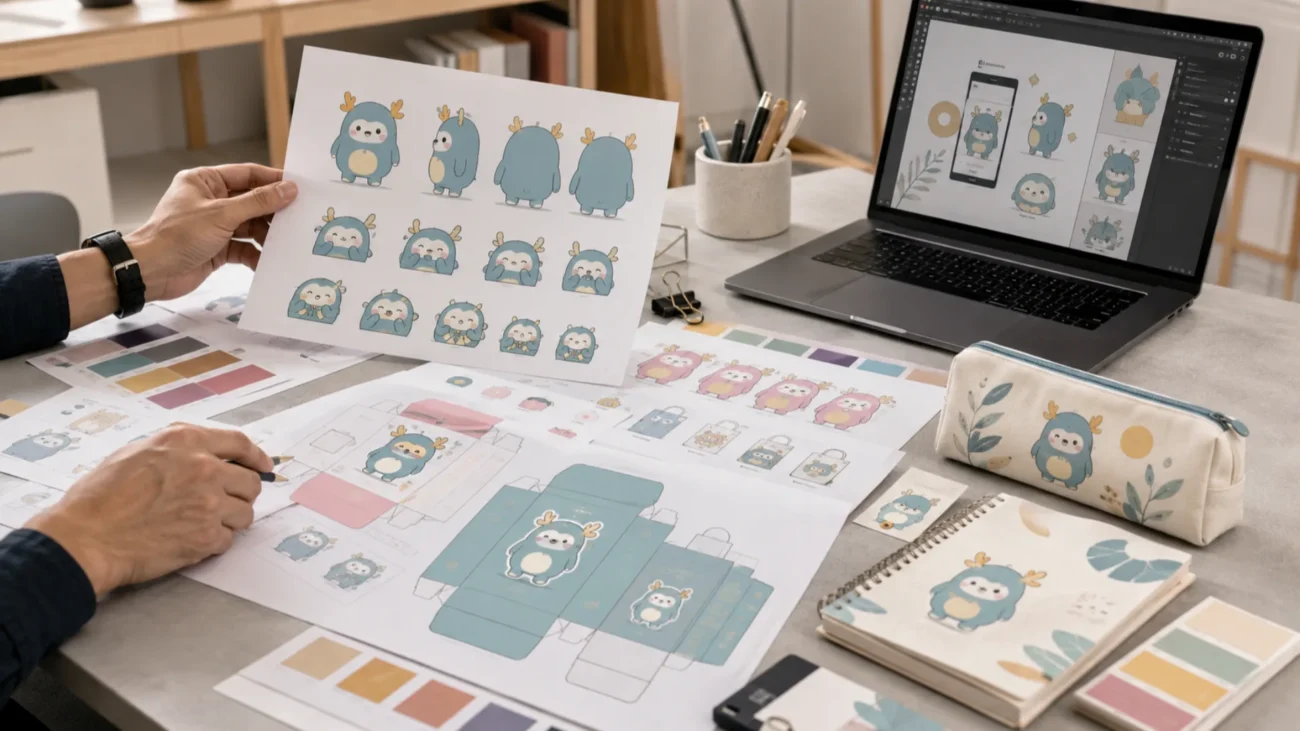
Use the Correct Artwork Source
Production files should come from the approved asset source used by the relevant program.
Avoid building commercial artwork from:
- Online screenshots
- Marketplace photographs
- Low-resolution web images
- Traced packaging graphics
- Files copied from another customer’s order
Maintain Artwork Version Control
Use file names that identify:
- Character
- Product
- Version
- Date or revision
- Approval status
For example:
characterA-pencil-case-front-v04-approved.ai
is easier to control than:
FINAL-new-2.ai
Check Color References
Some programs define exact color standards. Others may provide approved artwork without a separate Pantone specification for every element.
Where a color reference is provided, compare:
- Digital artwork
- Print proof
- Material swatch
- Physical sample
Different substrates can reproduce the same color differently.
Review Logo Usage
Logos and trademarks should follow the applicable brand or style guidelines.
Check:
- Proportion
- Size
- Position
- Color
- Clear space where specified
- Relationship with other graphics
For U.S.-focused buyers seeking a basic distinction between trademarks, patents, and copyright, USPTO’s official trademark, patent, and copyright overview provides a useful starting reference.
Review Character Placement on Real Products
Artwork that looks correct on a flat PDF can fail on the physical item.
Check whether the character crosses:
- Zippers
- Seams
- Handles
- Pockets
- Folds
- Die-cut edges
- Curved bottle surfaces
Review Cropping and Proportions
Do not distort artwork to force it into a product area.
Where cropping or alternative poses are used, confirm that they follow the approved artwork and applicable guidelines.
Control Marketing Artwork Too
Retailers may also need:
- Product listing images
- Catalog graphics
- Promotional banners
- Display materials
Ask whether approved marketing assets are available and whether retailer-created promotional graphics require review.
Packaging and Labeling for Licensed Products
Licensed packaging combines two separate requirements:
- the normal information required for the product and destination market; and
- any artwork, legal-line, brand, or approval requirements specified by the licensing program.
Match Packaging to the Correct SKU
Check:
- Product code
- Character
- Color
- Quantity
- Artwork version
- Package structure
A correct product inside the wrong character package is still a serious production error.
Copyright and Trademark Notices
Some licensing programs specify exact copyright or trademark notices.
Others may use different requirements.
Retail buyers should obtain the approved legal line for the relevant product rather than inventing one.
Do not assume every product must use the same:
- © notice
- ™ symbol
- ® symbol
- Year
- Rights-holder wording
Security or Authentication Features
Some programs use:
- Holograms
- Serialized labels
- Security stickers
- QR-based systems
- Other authentication devices
These are program-specific, not universal requirements for licensed merchandise.
If a security element is required, add it to:
- BOM
- Packaging specification
- QC checklist
Product Information
The normal product information still needs space.
Depending on the product and market, this can include:
- Product name
- Material information
- Manufacturer or importer details
- Warnings
- Country of origin
- Instructions
- Barcode
- Market-specific information
Do not allow character artwork to crowd out required product information.
Packaging Approval
If the relevant licensing program requires packaging approval, complete that step before mass printing.
Compare:
- Digital artwork
- Dieline
- Print proof
- Physical packaging sample
- Final product inside the package
This can prevent a large quantity of unusable packaging from being produced.
Samples and Pre-Production Approval
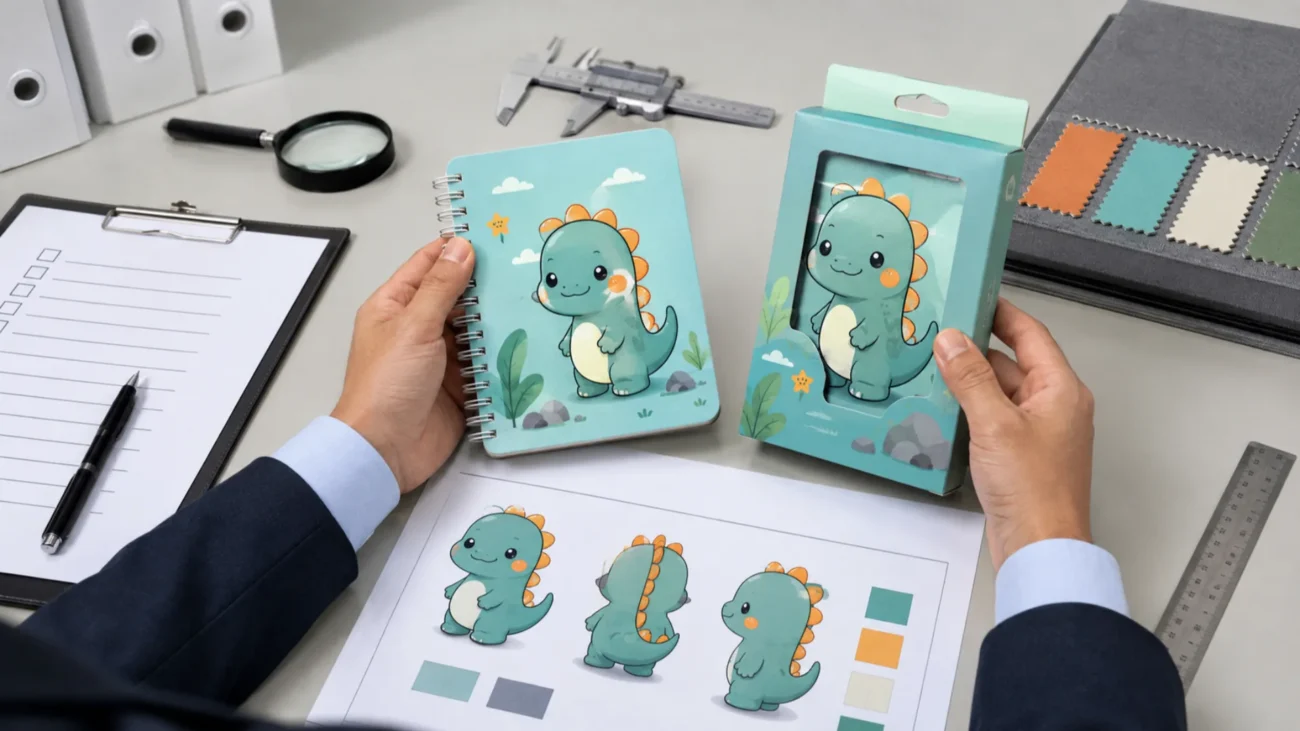
A digital rendering is not enough for a retail buyer.
Licensed product development should still include physical sample review.
Artwork Proof
Before physical sampling, check:
- Correct character
- Correct artwork version
- Logo
- Scale
- Placement
- Color references
- Legal lines
Physical Product Sample
Then inspect the real product.
Check:
- Artwork position
- Print quality
- Color
- Surface compatibility
- Seams
- Hardware
- Product construction
- Function
Licensed merchandise still needs ordinary physical-product QC.
Packaging Sample
Check the packaging with the finished product inside.
Review:
- Fit
- Artwork
- Barcode
- Legal line
- Product description
- Quantity
- Labels
- Visible product position
Approval Records
Maintain a clear record containing:
- SKU
- Artwork version
- Product sample version
- Packaging version
- Date
- Approval status
- Relevant comments
This is particularly valuable when several variations use similar artwork.
Separate IP Approval from Product QC
A product can have correctly approved artwork and still fail physical QC.
Examples include:
- Weak zipper
- Incorrect dimensions
- Scratched surface
- Poor stitching
- Damaged packaging
- Missing component
- Misaligned hardware
WIPO’s trademark-licensing materials emphasize that quality control can be important within trademark licensing arrangements.
Retail buyers should therefore run:
IP / artwork review and product quality review
as related but separate processes.
How to Sell Licensed Products: What Retailers Should Check
Retailers researching how to sell licensed products often begin by searching for a wholesaler.
A better first step is to define the intended transaction.
Confirm the Supply Source
Identify whether you are buying from:
- Licensee
- Distributor
- Manufacturer
- Supplier
- Other authorized commercial party
Then document how that party fits the relevant arrangement.
Confirm the Destination Market
Before ordering, state exactly where the goods will be sold.
For example:
- United States
- United Kingdom
- Germany
- Australia
- Multiple markets
Do this before production rather than after shipping arrangements have already been made.
Confirm the Sales Model
Tell the supplier whether the products will be sold through:
- Physical stores
- Own website
- Marketplace
- Distributor
- Promotional program
The supplier can then identify any relevant contractual restrictions or approval requirements.
Maintain Product Records
For each licensed SKU, keep:
- Supplier
- Product specification
- Authorization documentation
- Artwork version
- Packaging version
- Sample approval
- Purchase order
- Invoice
- Reorder history
Review Marketplace Requirements Separately
A marketplace may impose its own evidence or listing requirements in addition to whatever IP authorization applies to the product.
Do not assume that supplier authorization automatically guarantees marketplace listing approval.
Recheck Before Reordering
Before a reorder, ask:
- Is the authorization still current?
- Is the product scope unchanged?
- Is the market unchanged?
- Is the sales channel unchanged?
- Is the artwork still current?
- Has the SKU changed?
- Has the packaging changed?
The answer can determine whether the previous approval package can still be relied on.
Common Licensed Merchandise Sourcing Models
There are several common commercial models.
Model 1: Buyer Holds the Relevant Authorization
The buyer controls the licensed program and appoints a manufacturer.
The buyer may provide:
- Artwork
- Style guide
- Product brief
- Packaging requirements
- Approval process
The manufacturer executes production.
Model 2: Supplier Offers Licensed Products
The supplier offers products under an applicable authorization or through an authorized supply arrangement.
The retailer checks:
- Product scope
- Territory
- Commercial model
- Documentation
- Current status
Model 3: Licensee Uses a Contract Manufacturer
The licensee appoints a factory to produce goods.
The factory performs manufacturing while the licensee manages the licensing relationship and relevant approval obligations.
Model 4: Buyer Provides Licensed Artwork to a Contract Manufacturer
This is similar to Model 1 but particularly relevant to OEM programs.
The factory should receive enough information to understand:
- Which products it may produce
- Which artwork it may use
- Which customer the artwork belongs to
- How approvals are handled
Model 5: Original Character Products
No third-party licensed character is involved.
The product uses original artwork legitimately controlled by the relevant party.
Do not call this officially licensed merchandise merely because it uses a cartoon character.
Questions Retailers Should Ask a Licensed Product Supplier
Before placing a substantial order, ask structured questions.
| Question | Why It Matters |
|---|---|
| Who owns or controls the IP? | Identifies the rights source |
| What is your role in the supply arrangement? | Clarifies whether the supplier is licensee, manufacturer, distributor, or another party |
| What documentation supports your authorization? | Helps establish the supplier’s connection to the program |
| Which product categories are covered? | Prevents unsupported category expansion |
| Is this specific SKU covered or approved? | Connects the rights review to the actual order |
| Which territories are covered? | Confirms the intended sales market |
| Are there restrictions or requirements for our sales channels? | Helps evaluate retail, e-commerce, marketplace, or distribution plans |
| What relevant expiry or renewal dates should we know? | Helps plan production and reorders |
| Does a new SKU or design need another approval? | Helps calculate development time |
| Does packaging require approval? | Prevents premature printing |
| Which artwork files should the factory use? | Reduces unauthorized or outdated asset use |
| Can approved artwork be used in our online listings? | Clarifies marketing-asset usage |
| What documentation accompanies the goods? | Helps maintain procurement records |
| What should be rechecked before a reorder? | Reduces reliance on outdated approvals |
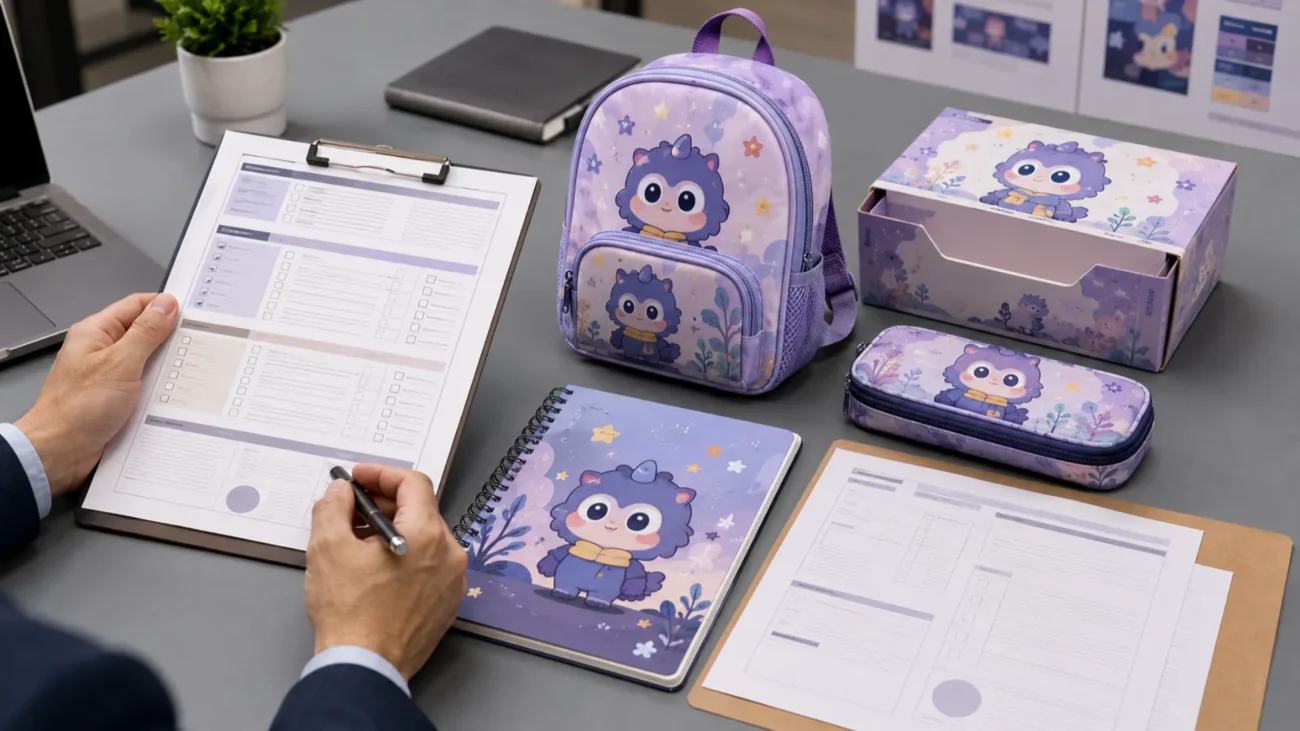
Retailers conducting a broader supplier assessment can also use our school-supplies supplier guide to compare sampling, quality control, production capability, documentation, communication, and reorder support.
Retail Buyer Checklist for Licensed Merchandise
Before issuing the final purchase order, review five groups of information.
Licensing
- IP / character identified
- Rights source identified
- Supplier role understood
- Authorization documentation reviewed
- Product scope confirmed
- Territory confirmed
- Relevant sales-channel requirements confirmed
- Relevant dates confirmed
Product
- SKU confirmed
- Product category confirmed
- Materials confirmed
- Dimensions confirmed
- Construction confirmed
- Normal product compliance review completed
- Physical QC requirements defined
Artwork
- Correct artwork files
- Correct version
- Correct logo
- Color references checked where applicable
- Placement checked
- Cropping checked
- Product artwork approved where required
Packaging
- Correct SKU
- Correct character
- Approved packaging artwork where required
- Correct legal line
- Barcode
- Market information
- Security feature where required
- Physical packaging sample checked
Order
- MOQ
- Quantity
- SKU mix
- Lead time
- Approval lead time
- Inspection plan
- Shipping destination
- Reorder review requirements
Wholesale and Supplier Keywords Belong on Commercial Pages
This article is deliberately optimized around the informational keyword licensed merchandise.
Queries such as:
- licensed merchandise wholesale
- wholesale licensed products
- licensed stationery wholesale
- licensed product supplier
have stronger transactional intent.
Those users are more likely to want:
- Available IP collections
- Available products
- Authorization model
- MOQ
- Customization
- Commercial inquiry
rather than another educational explanation of licensing.
That is why the commercial intent should be directed to Wandefu’s dedicated License page rather than forcing wholesale keywords into this article.
Retail buyers ready to move from research to product selection can review Wandefu’s Licensed Character Products page for available character collections, product categories, bulk-order support, customization options, and applicable authorization requirements.
This separation gives the two pages different jobs:
Blog: education and due diligence.
License page: products and commercial conversion.
Common Mistakes When Sourcing Licensed Merchandise
1. Assuming a Familiar Character Means the Product Is Authorized
Appearance does not prove authorization.
2. Asking Only Whether the Factory Is “Licensed”
Identify the actual role, IP, product, territory, and sourcing arrangement.
3. Checking the Supplier but Not the Authorization Relationship
A legitimate company can still offer a product outside the scope of a particular IP arrangement.
4. Assuming One Product Category Covers Every Category
Stationery, bags, tableware, crafts, and accessories should be checked against the applicable scope.
5. Ignoring Territory
Do not assume rights covering one market automatically cover every other market.
6. Ignoring the Intended Sales Model
Confirm any applicable channel restrictions or requirements before ordering.
7. Using Artwork from an Unverified Source
Do not build production files from web images or copied packaging.
8. Changing Character Artwork Without Checking the Approval Process
Color, placement, cropping, and logo use may be controlled by the relevant program.
9. Printing Packaging Before Required Approval
Packaging reprints can be expensive and delay seasonal launches.
10. Assuming Every Licensing Program Uses the Same Hologram or Label
Security requirements vary.
Follow the actual program.
11. Treating Buyer-Supplied Artwork as Unlimited Permission
The factory should understand what production use has actually been authorized.
12. Expanding One SKU into a Complete Collection Without Checking Scope
A successful notebook does not automatically authorize a backpack or lunch box.
13. Treating a Previous Order as Permanent Authorization
Review the current status before reordering.
14. Checking IP but Ignoring Product Quality
Correct artwork cannot compensate for a defective physical product.
15. Buying Inventory Before Completing Due Diligence
Verify the commercial framework before committing substantial production funds.
Frequently Asked Questions About Licensed Merchandise
What Is Licensed Merchandise?
Licensed merchandise is merchandise using intellectual property under an applicable licensing or authorization arrangement.
The IP may include characters, trademarks, logos, artwork, designs, or other protected assets.
WIPO describes merchandising as a form of IP licensing in which protected IP is applied to consumer goods.
What Are Licensed Products?
Licensed products are individual products that use third-party IP within an applicable authorization arrangement.
A product’s appearance alone is not enough to establish whether it is licensed.
Is Character Stationery Always Licensed Merchandise?
No.
Character stationery can use completely original artwork created or legitimately controlled by the supplier or customer.
It becomes a third-party licensing issue when protected IP belonging to another party is being used.
What Is the Difference Between Licensed Stationery and Original Character Stationery?
Licensed stationery uses third-party IP under an applicable licensing arrangement.
Original character stationery uses legitimately original artwork that is not dependent on third-party character rights.
The two models therefore involve different approval and sourcing processes.
How Does Product Licensing Work?
At a basic level, the relevant IP owner or authorized rights holder grants defined rights to another party.
Those rights may be limited by factors such as:
- Product scope
- Territory
- Duration
- Artwork
- Quality requirements
- Other contractual conditions
The exact structure depends on the agreement.
How Can Retailers Sell Licensed Products?
Retailers should source through an appropriate authorized supply arrangement and confirm that their intended product, territory, and commercial model fit that arrangement.
Where the legal position is unclear, qualified IP counsel should review the specific arrangement.
Can One License Cover Stationery, Bags, and Tableware?
Possibly, but it should not be assumed.
The relevant agreement determines the actual product scope.
Does Every Licensed Product Need Separate SKU Approval?
Not necessarily.
Some programs use SKU-level review, while others have different approval structures.
Ask what applies to the specific program before building the production schedule.
Does Every Licensed Product Need a Hologram?
No.
Some programs use holograms or other authentication features; others do not.
Use only the security requirements specified for the relevant program.
Can a Supplier Manufacture Products Using a Buyer’s Licensed Artwork?
Potentially, where the buyer’s authorization permits that manufacturing arrangement.
The factory should understand the applicable production scope and should not treat possession of an artwork file as permission for unrelated use.
What Documents Should Retailers Request?
There is no single universal document package.
Depending on the sourcing model, relevant documentation can include:
- Authorization evidence
- Product or category scope
- Territory information
- Supplier/manufacturer relationship documents
- Approved artwork
- Approved packaging
- Sample approval records
The document request should match the supplier’s actual role.
Is Licensed Merchandise Wholesale Different from Ordinary Wholesale Sourcing?
Yes, operationally it often adds an IP-verification layer.
Normal wholesale sourcing already requires:
- Product specification
- Samples
- Quality control
- MOQ
- Packaging
- Production
- Shipping
Licensed-product sourcing can add:
- Authorization review
- Scope review
- Territory review
- Artwork control
- Approval records
- Reorder verification
Conclusion
Sourcing licensed merchandise requires more than choosing an attractive character and placing a purchase order.
Retailers need to understand the IP being used, how the supplier fits the authorization arrangement, which products are covered, where the products are intended to be sold, how artwork and packaging are controlled, and whether the relevant approvals remain current throughout production and reordering.
The process becomes particularly important for coordinated school collections. Character stationery, pencil cases, backpacks, lunch products, craft kits, storage products, and accessories may all share one visual theme while still belonging to different product categories from a licensing perspective.
Retail buyers should therefore connect every authorization check to a specific product and SKU rather than relying on a general statement that a supplier “has the license.”
At the same time, IP review should never replace ordinary product-quality control. Artwork, construction, materials, packaging, labeling, function, and destination-market requirements all need their own review.
Buyers ready to compare actual product options can browse Wandefu’s Stationery collection for notebooks, pencil cases, stationery sets, writing products, and character-themed school supplies.
Retailers and distributors planning a licensed-character project can contact the Wandefu team to discuss product categories, destination markets, order quantities, customization needs, and the applicable sourcing arrangement before requesting a quotationWandefu’s current contact page is specifically set up for wholesale pricing, quantities, customization, destination-country information, and partnership inquiries.